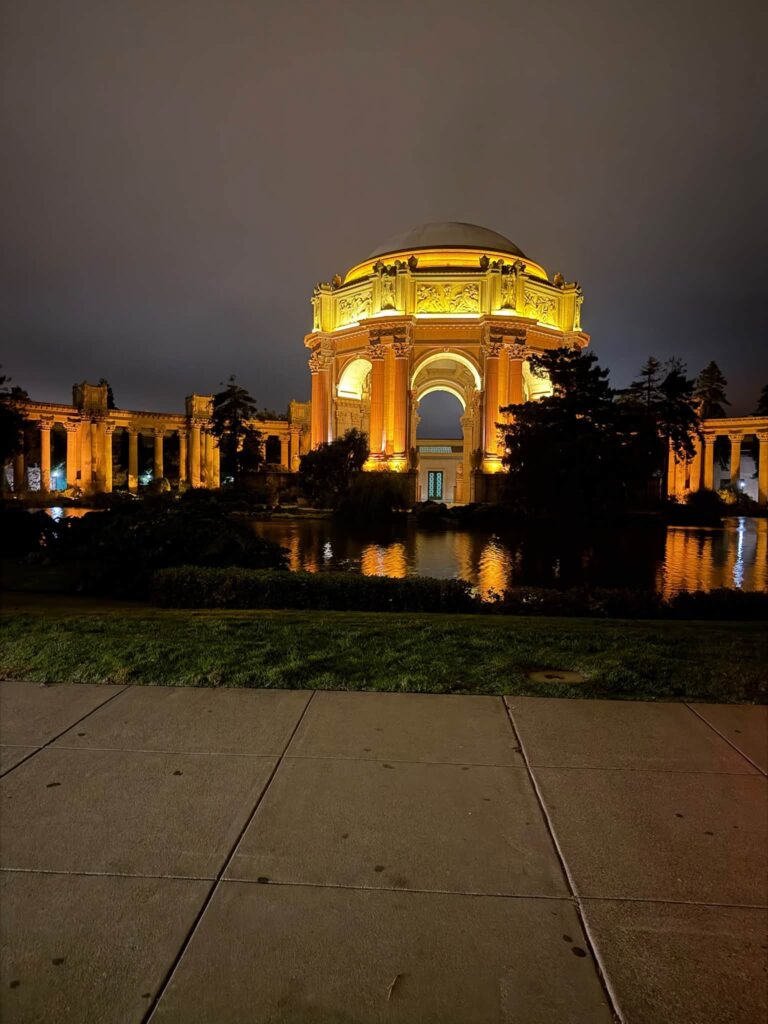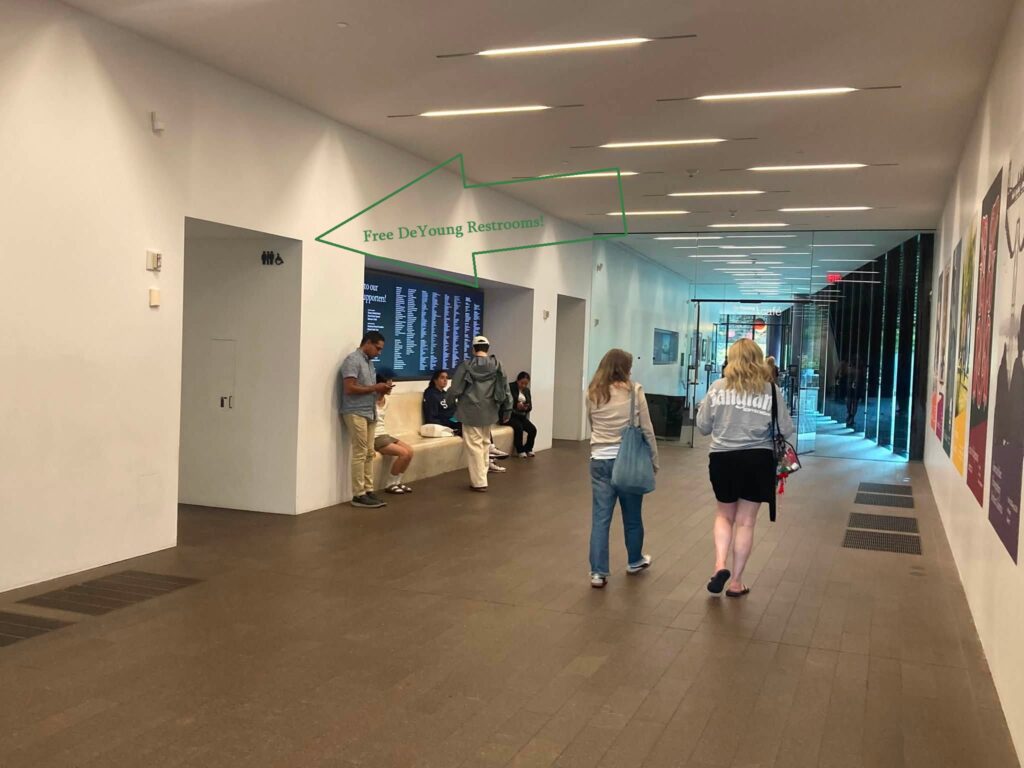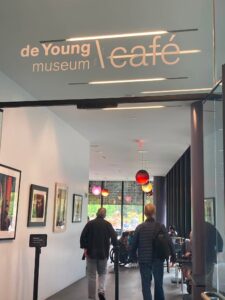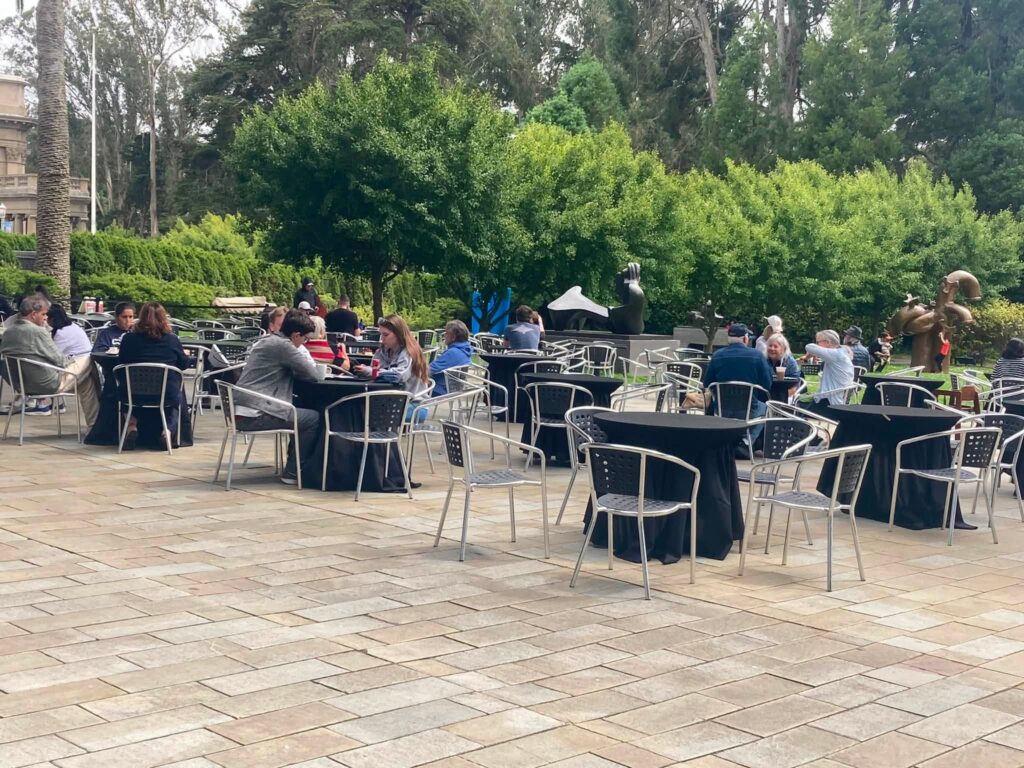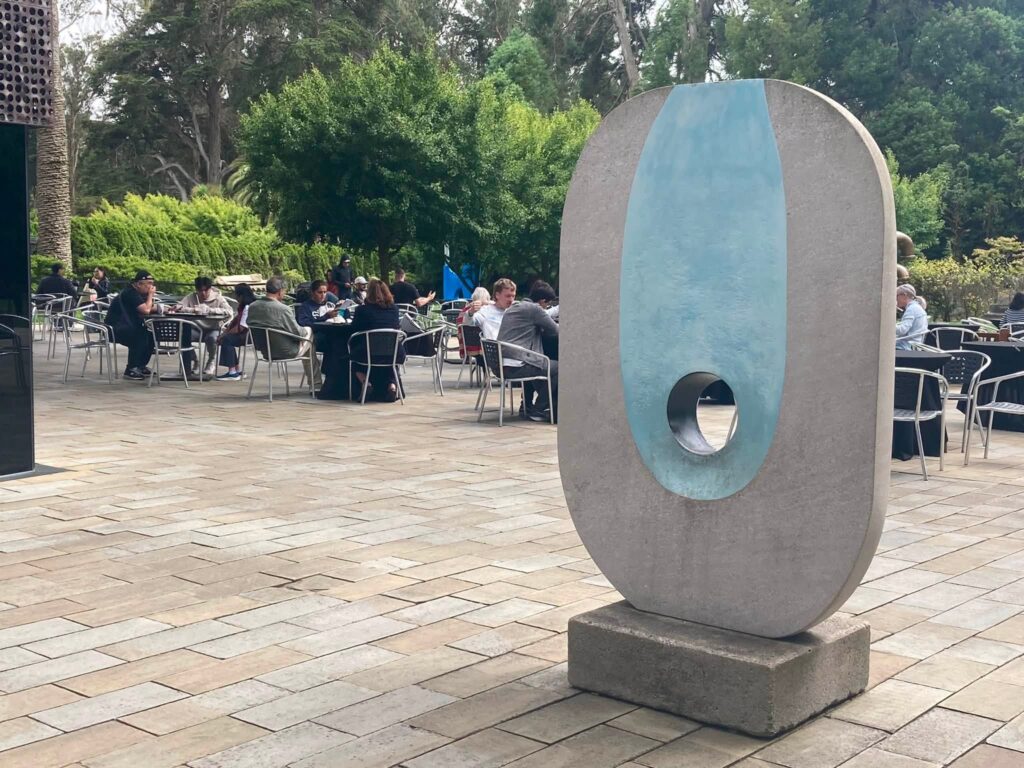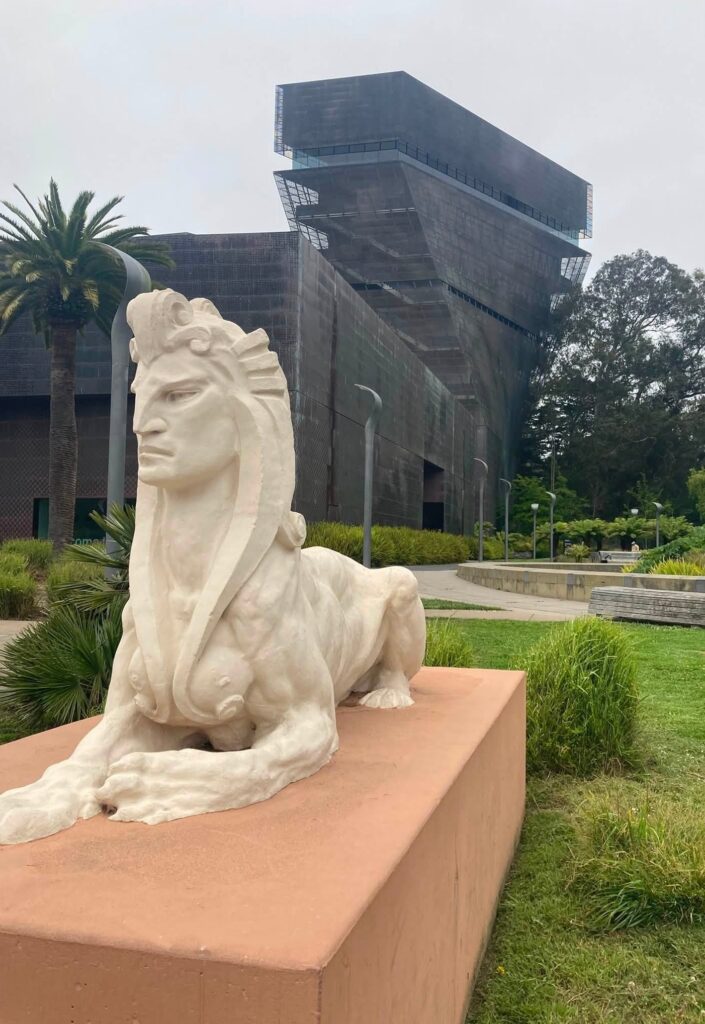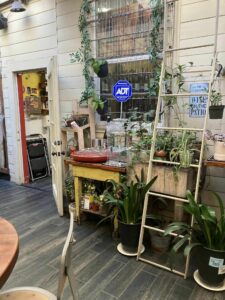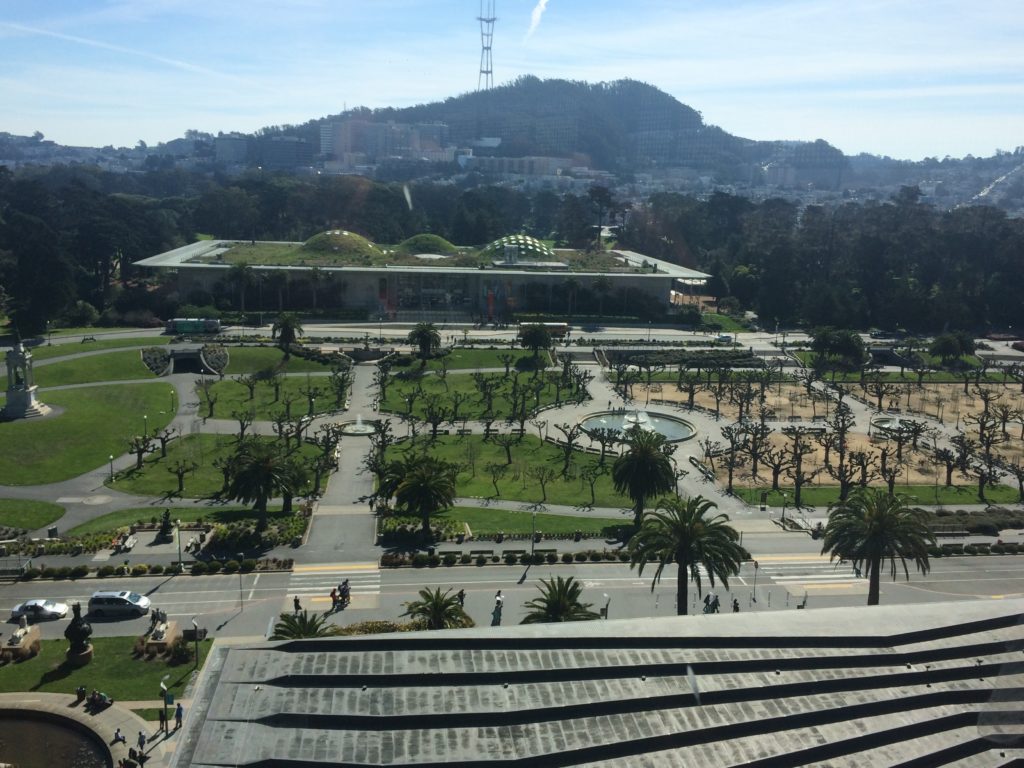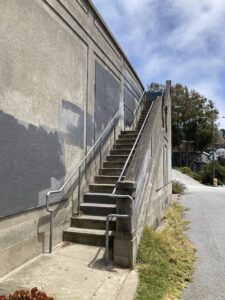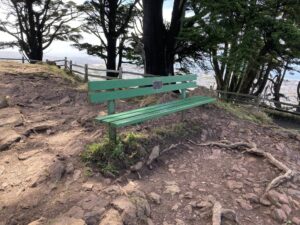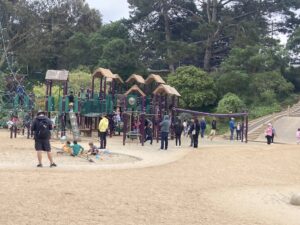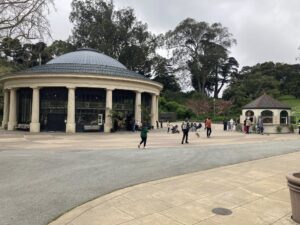
On the west side of the DeYoung, the side closest to the Japanese Tea Garden is a free Sculpture Garden and museum café.
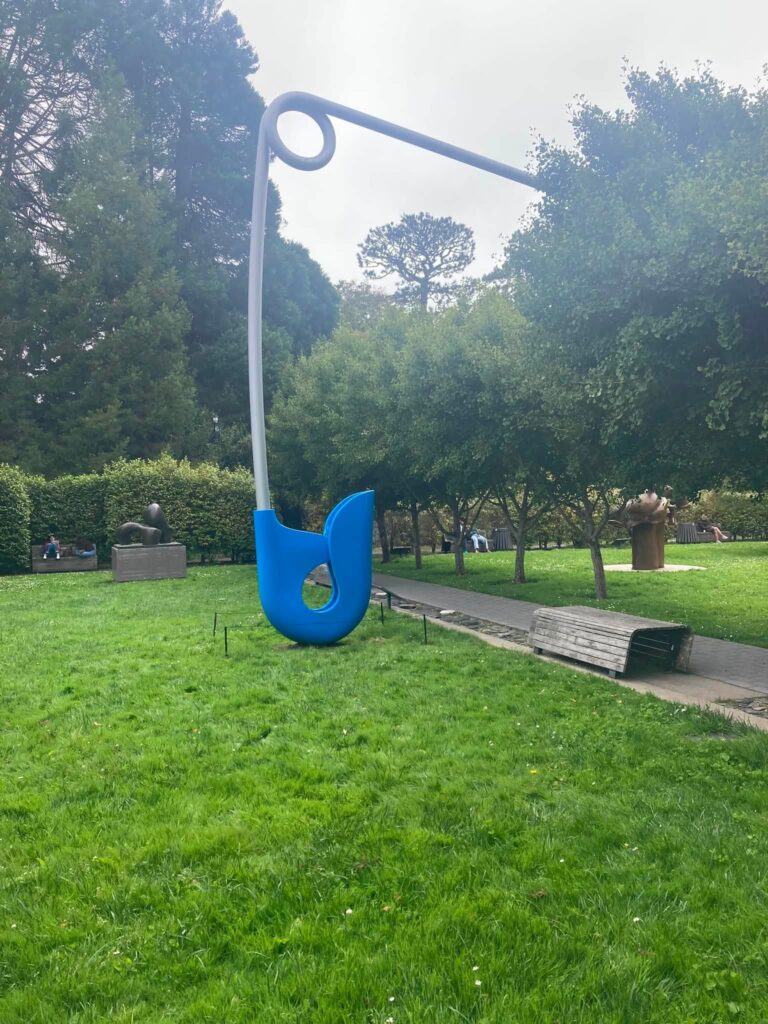
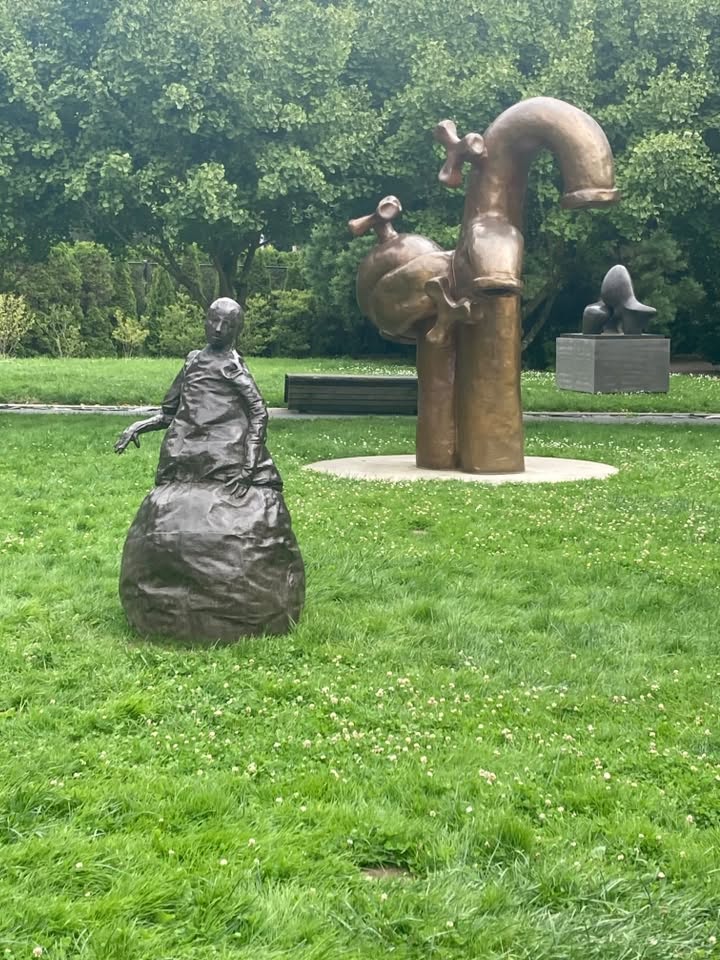
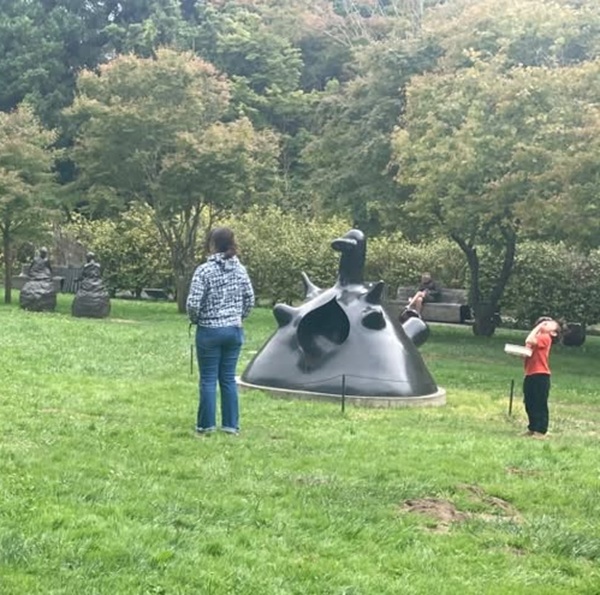
You don’t have to buy anything from the café to enjoy the art. There are several pieces visible around and on the lawn next to the café: the Klaus Oldenberg giant safety pin, some people hatching out of eggs, and a spikey thing that has a rope around to discourage kids from playing on it. No rope around the egg people; they’re fair game.
Egg person and big faucet
A rope discourages kids from playing on the spikey piece. The egg people in the are fair game.
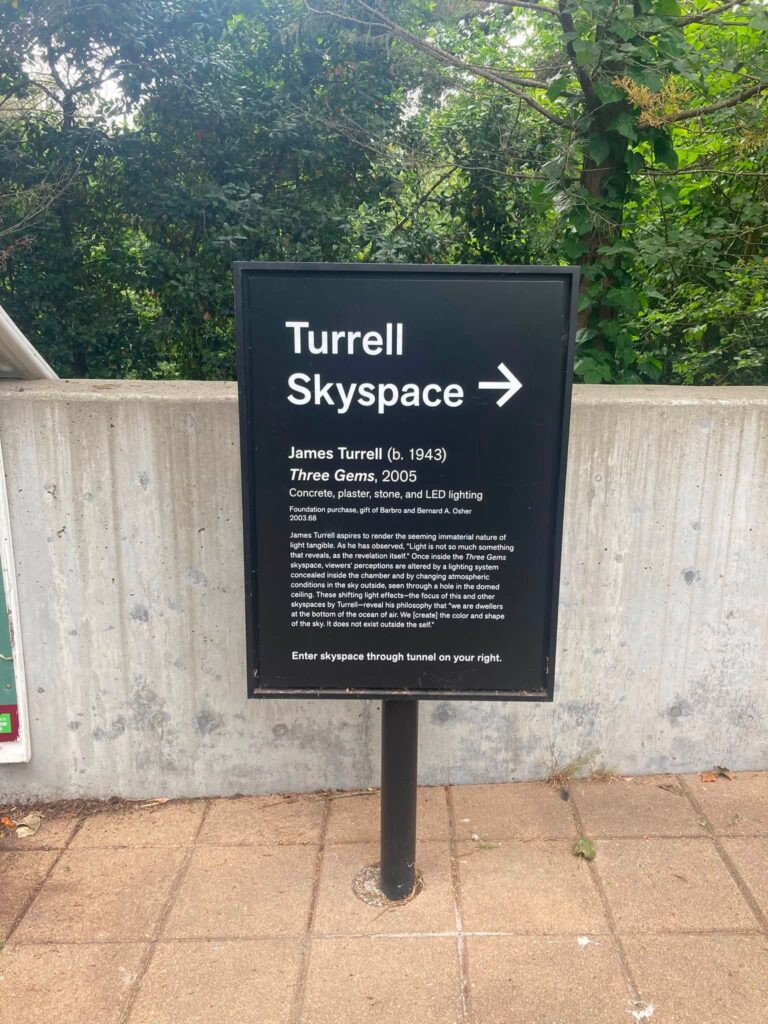
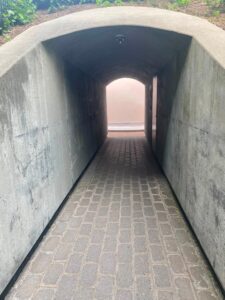
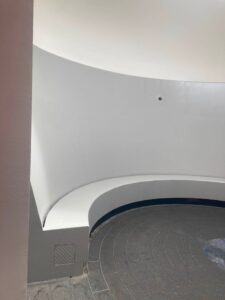
A path behind the back hedges features more art. Down the right side of the lawn is the entrance to the Turrell Skyspace. It’s easy to miss, but don’t. Walk down the path to a round room with a curved bench, and an opening in the ceiling. This hole becomes a frame to viewing the sky, and nudging you to focus on what you can see through opening, instead of taking in the whole scene.
The best feature of the museum café is the large outdoor patio that overlooks the lawn and art. Dining al fresco feels like an indulgence, and The DeYoung wisely made the café available to anyone. Many museums don’t, such as the Palace of the Legion of Honor, and the Academy of Sciences across the concourse. I haven’t been asked, but if asked, I would say this is a design mistake and cuts off a source of revenue, which museums always need.
Like all museum cafes, it is a little bit pricy for what you get, but not insultingly so. This might be because it is open to the general public without requiring admission, and doesn’t have the advantage of holding museum goers hostage to their café and charging over the top.
Since I’m lucky enough to live nearby, I often go the café and sit outside with a book and something to drink, maybe eat. It’s pleasant change from sitting in a coffee shop. If you don’t live nearby, but are in the park and need a break, the DeYoung café and sculpture garden is a welcoming place to spend some time and recharge.
Most of my guests who venture into Golden Gate Park go to the Japanese Tea Garden. And they should. I’m not a garden guy, but every time I visit I’m moved by the precision and beauty which gives me a sense of tranquility, a state of mind I generally have in short supply but especially these days Next door is the DeYoung museum, which is not as popular with tourists. I get a fair number of guests who say they are not “museum people,” which is fine, but a quality I don’t share. I love museums, but you do you. Like I said, I’m generally not a garden guy. But even if you’re not a museum person, the DeYoung has three free things that make it worth visiting.
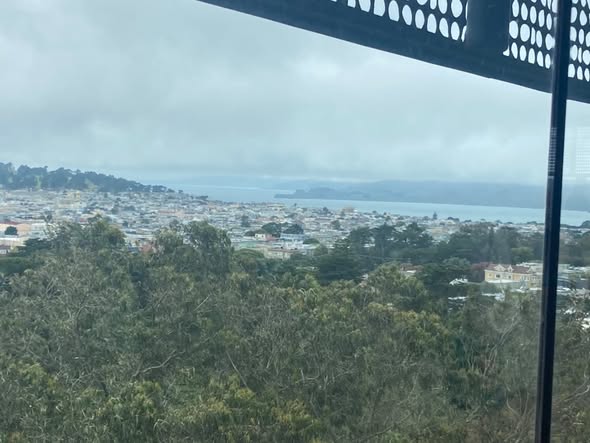
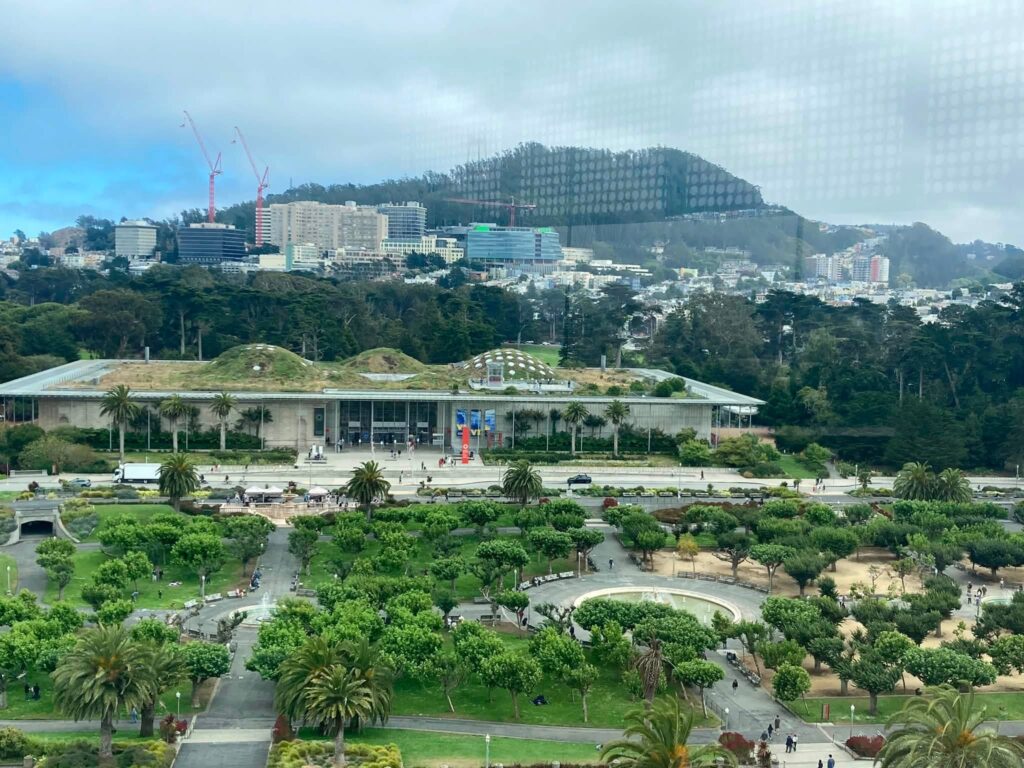
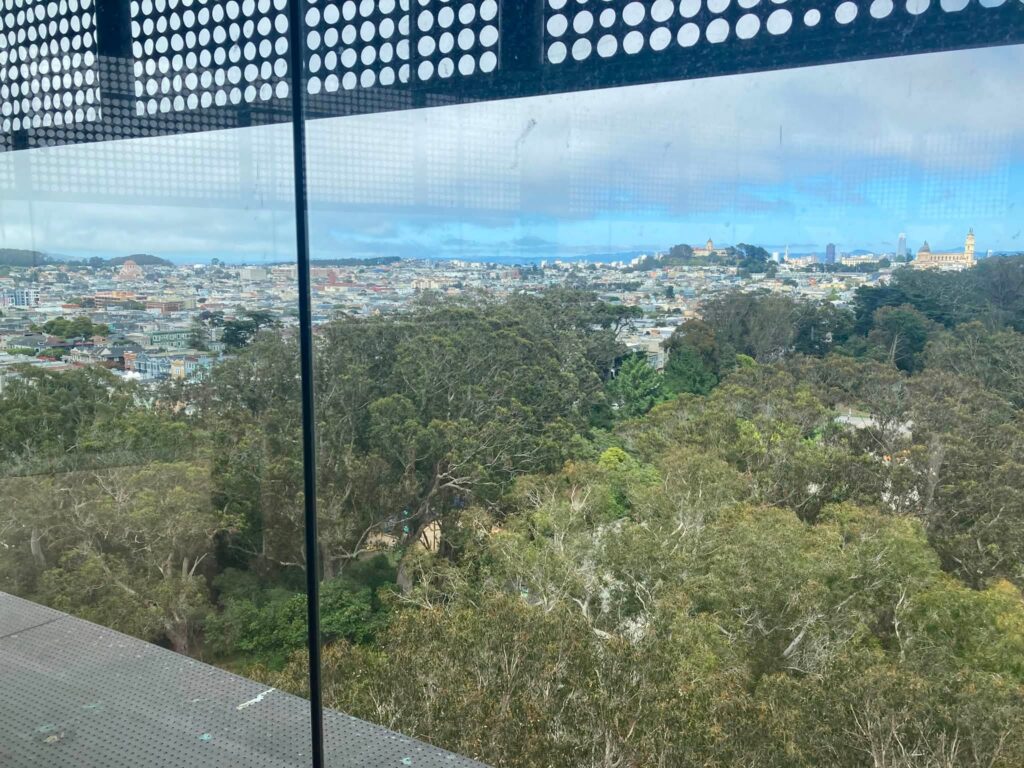
Part 1: The Observation Deck. The observation deck doesn’t seem like it should be free, which is why most guests, and a lot of locals don’t know about it, even when pay to go into an exhibit. This twisted tower has a 360 degree view 14 stories over the park, with views of the park, downtown, Richmond and Sunset districts and the entrance of the bay in the distance.
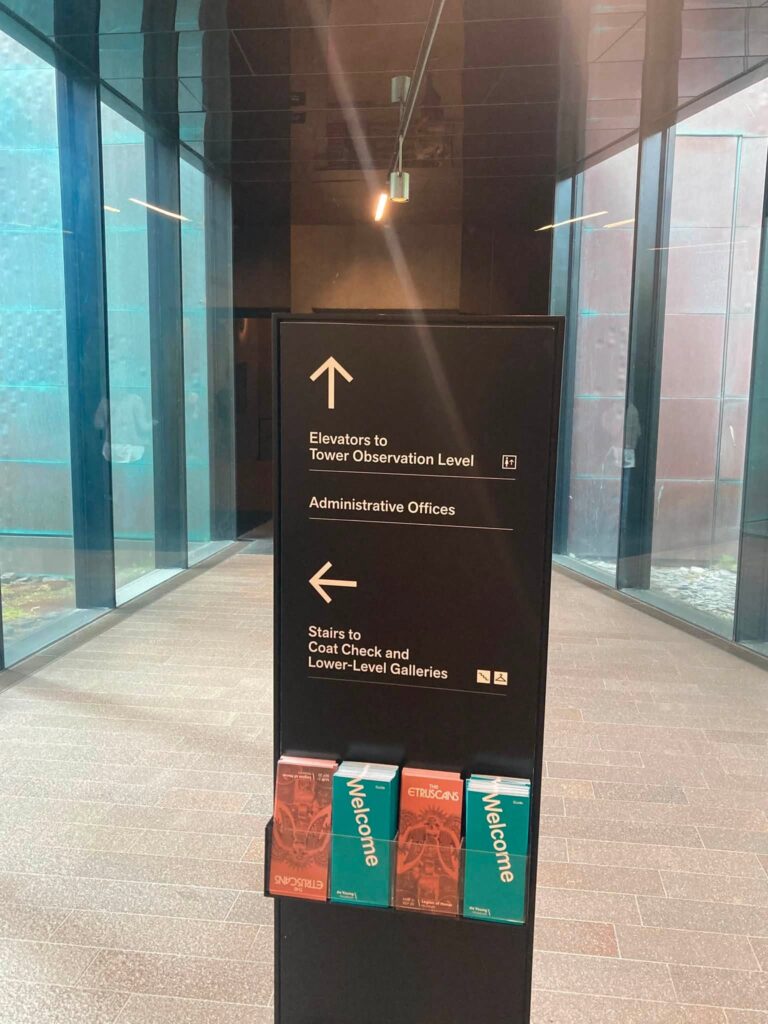
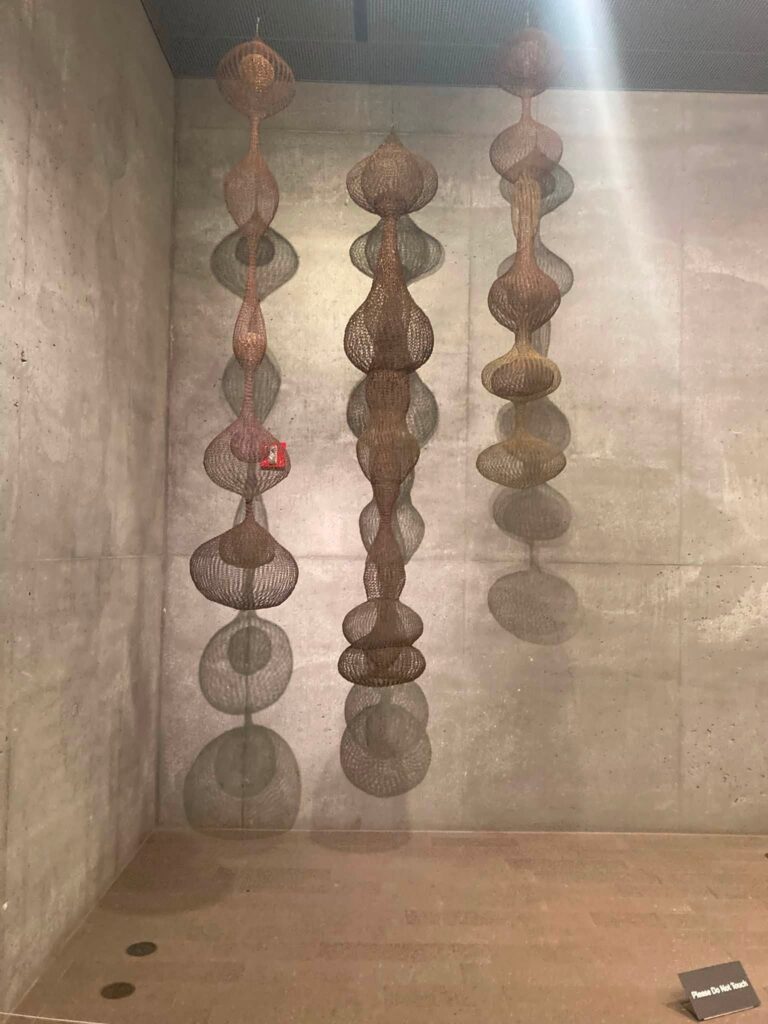
Go into the DeYoung lobby, and near the ticket counter a sign will direct you to the elevator. Take time to enjoy the wire sculptures by San Francisco artist Ruth Azawa in the elevator lobby.
I will grant that this is not the most dramatic view in the city. San Francisco, thanks to the hills, has a staggering abundance of good views. But few are in a tower, enclosed, and don’t require at least somewhat of a climb.
And people who are not museum people or garden guys can agree on one thing: everyone likes a good view. Free DeYoung thing Parts 2 and 3 arrive soon.
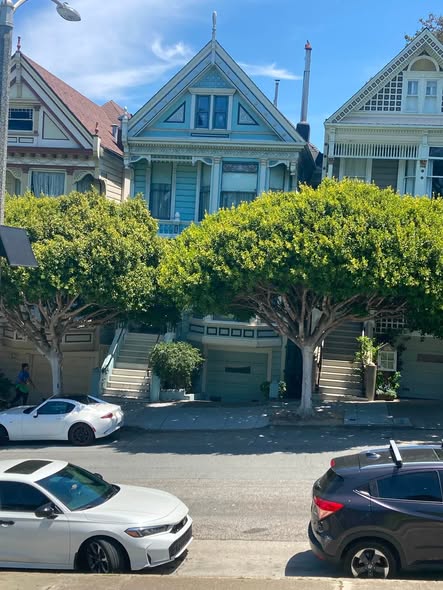
When I take guests out on a private tour of San Francisco, the number one request, right after Golden Gate Bridge, is to see the Painted Ladies. Which, if I’m doing the math right, makes it the second most favorite destination.
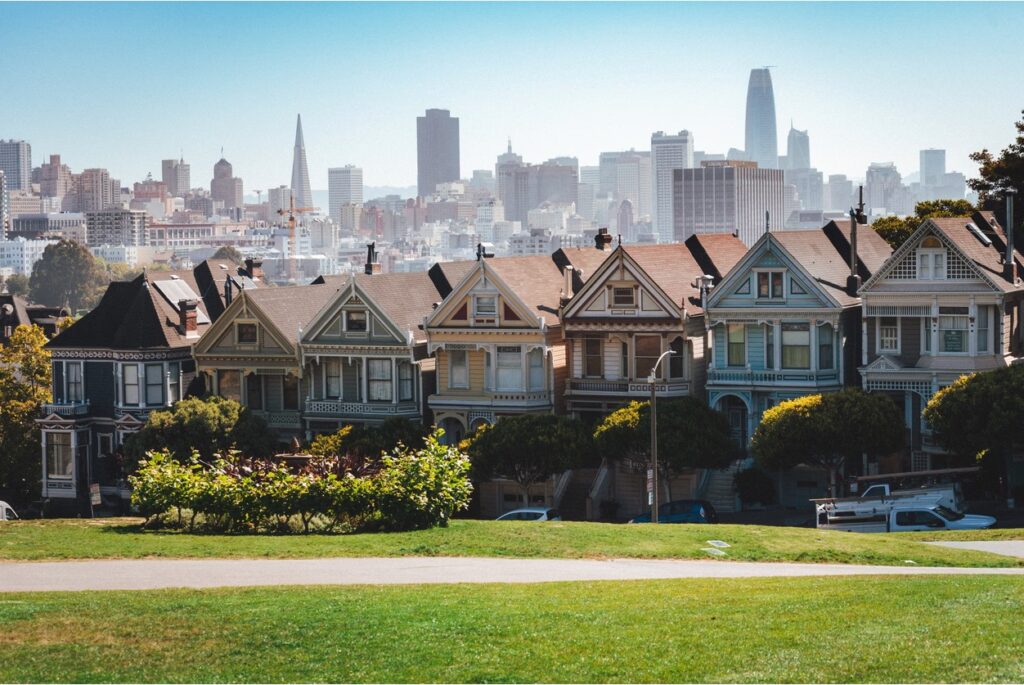
The Painted Ladies. A simple image that captures the contrast of old and new San Francisco.
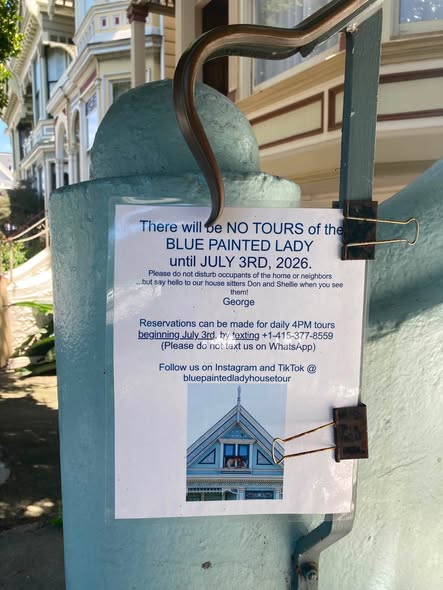
You can take a tour of the Blue House on Postcard Row.
This group of Victorians go by many names: The Painted Ladies, Postcard Row, The 7 Sisters, the Full House Houses. Recently, many of my guests have been baffled when they see them because they were expecting a sculpture, or actual naked woman. Really. I blame this on travelers clicking on “Ten Things to See in San Francisco” and only reading the headline as the extent of their travel research. The reason these Victorians are popular is the image tells a simple, vivid story. Old San Francisco in the front, contrasting with modern San Francisco in the background. The repetition–they are similar, not identical–we find ascetically pleasing. It is an easy photo to take. All that combines in being featured in countless television shows, movie, postcards, and refrigerator magnets.
After July 3rd, book by texting 1-415-377-8559
You can get a tour of one of the most famous houses in San Francisco most everyday at 4pm. The story of George Horsfall and his house was featured in the Chronicle, and is worth a read. I’ve taken the tour and I highly recommend it. Not only is it a chance to experience the inside of a house that, every time you see it on television or a postcard, you can brag “I’ve been in the blue one,” but George is delightful host and an entertaining storyteller. It’s billed as tour, but is really is a rare opportunity to hang out with an interesting San Franciscan as he tells stories about his house, his family, and the history of the neighborhood.
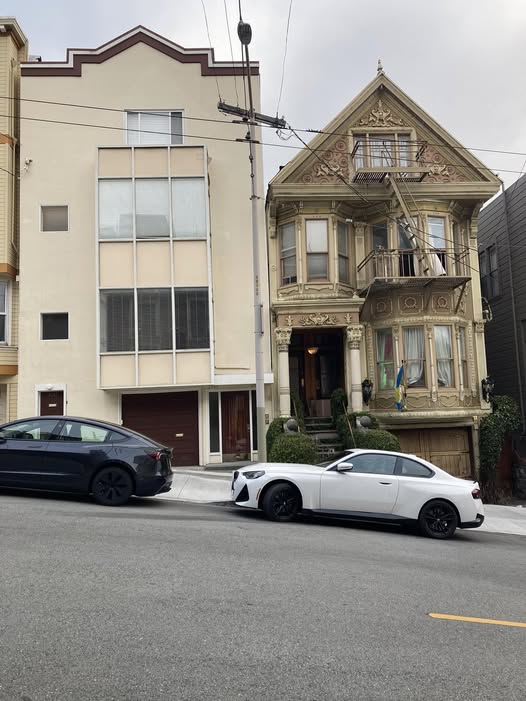
My private tour guests always comment on San Francisco’s architecture. There is a wide variety to see, but the Victorians are always a favorite. Built mostly between 1870-1900 (give or take a few years), there was a time they were not popular. When people were being lured to the suburbs in the 1950’s, people who stayed in the city wanted contemporary housing, and Victorians fell out of fashion. They were cheap to rent, cheap to buy, and when bought, many single family homes, or structures of 2-3 flats, were torn down to build apartment buildings. I’m all for density housing. It is necessary for a city to have an abundance of apartments. But did builders have to make many of them so aggressively and deliberately dull? No, they didn’t. But it’s cheaper, easier, and faster to build a boring box, and the city didn’t have building codes to reign in the lack of imagination and effort, and what affect it would inflict on the neighborhood. I tell my guests that when they see a Victorian, and something next to it very much Not Victorian, that tells the history of the neighborhood, and how and when it changed. In the image below, on the left, it’s not as if there was vacant lot waiting for decades for someone to install this slap-crap of a building. There was a Victorian there, perhaps much like the one on the right, torn down in the 50’s or 60’s What also annoys me is knowing the builder of this Monument to Dull doesn’t live in anything remotely close to that bland. I’m sure they took the money from building visual insulting housing, and live in something attractive. If I were elected King of San Francisco, I would make it a law that a builder would have to live in, or directly across from, any residential property they are going to subject the public to for 2 years.
When I travel I like to explore neighborhoods overlooked by tourists. Neighborhoods at the top of tourist’s list also are also worth visiting–there is generally a reason they are popular. North Beach in San Francisco is a favorite with locals and tourists alike. But even in popular destinations, there are places where you can experience the city like a local. Spec’s in North Beach comes to mind (I write about it here.)
Even better than discovering a local’s spot in well trod neighborhood is discovering one where every spot is a local’s hang. Glen Park is that kind of place. But don’t take my word for it: Time Out Magazine said so, ranking it 35th coolest city in the world.
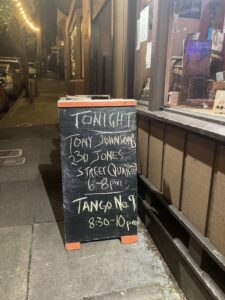
I don’t make it a habit to go eat there, although there are number of good restaurants. Glen Park is tucked away in a canyon, accessible on public transportation by BART from downtown, or the 44 O’shaughnessy bus from Golden Gate Park. I do make it a point to go see music at Bird and Becket.
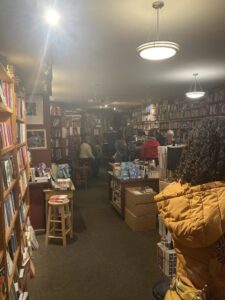
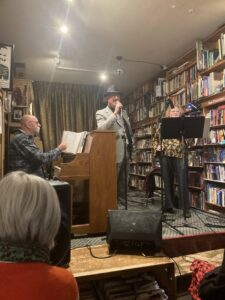
Bird and Becket is a small space, the shelves crammed with books and records and books and records piled on top of what can’t fit on the shelves. When they have a band, they set up on a small stage, and folding chairs fill space where shelves roll out of the way. Describing it as “intimate” is an understatement.
And after, or before the show, go to one of the restaurants or bars down the street. Like the locals do.
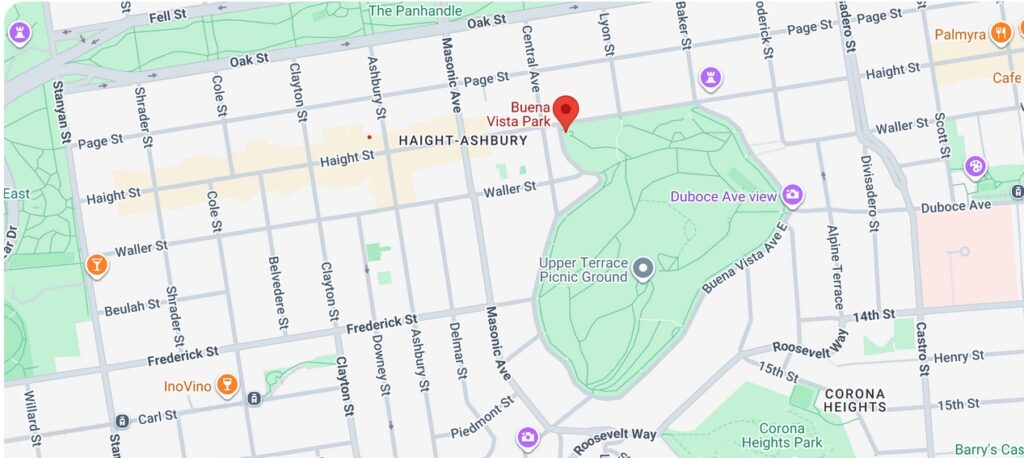
Buena Vista Park is on the edge of the Haight Ashbury, and overlooked by most visitors to San Francisco. Most guest stop their journey down Haight St at Masonic, which makes some sense. The interesting retail—head shops, vintage stores, and restaurants end at the intersection of Haight and Masonic.
Buena Vista Park is on the edge of the Haight-Ashbury
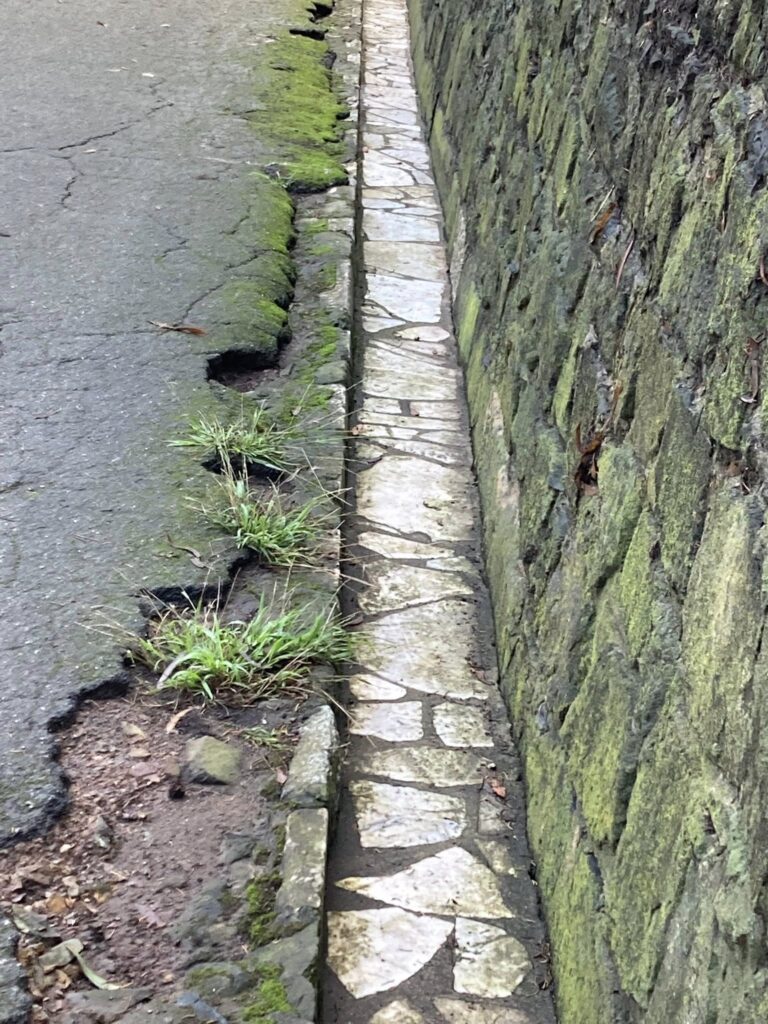
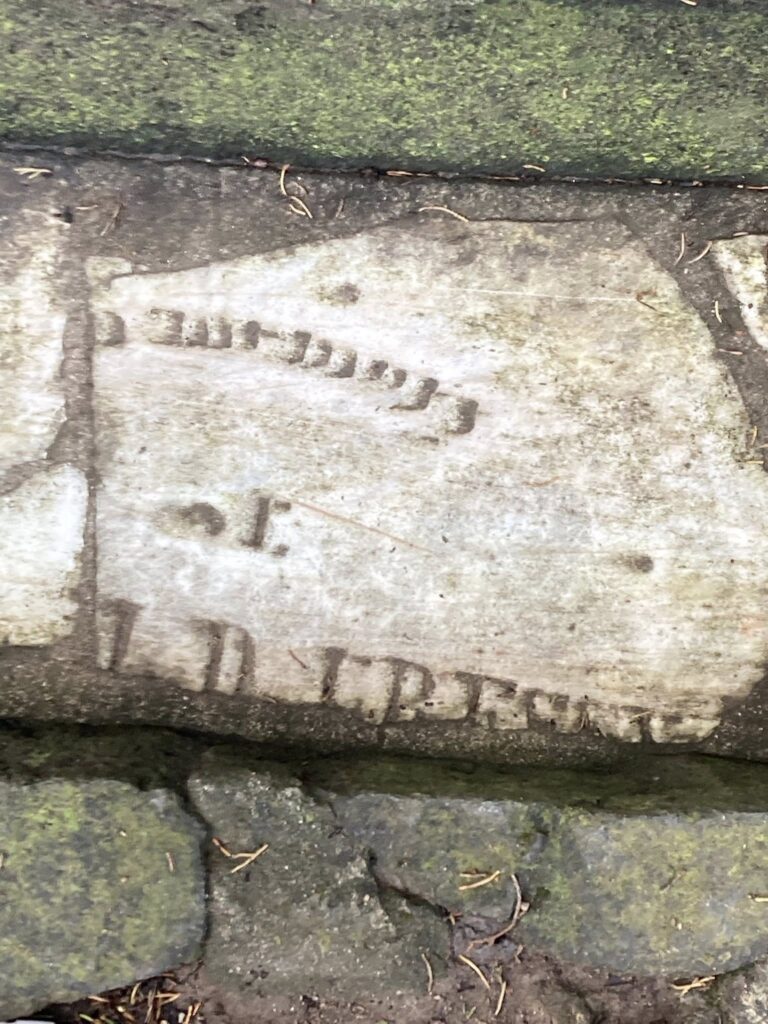
It was the first park in San Francisco, but its real distinction are the pieces of gravestones that line the gutters and walkways.
Gravestones line the walkways of Buena Vista Park
Yes really. It’s marble from broken headstones that went unclaimed when San Francisco moved the cemeteries out of the city in the early 1900’s.
Yes really. But that’s another story.
When headstones went unclaimed in the cemetery relocation, the marble was busted up and used for various civic projects around San Francisco. Upgrading Buena Vista park was one of those projects.
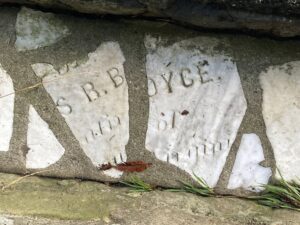
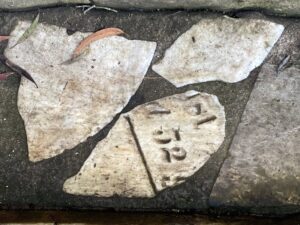
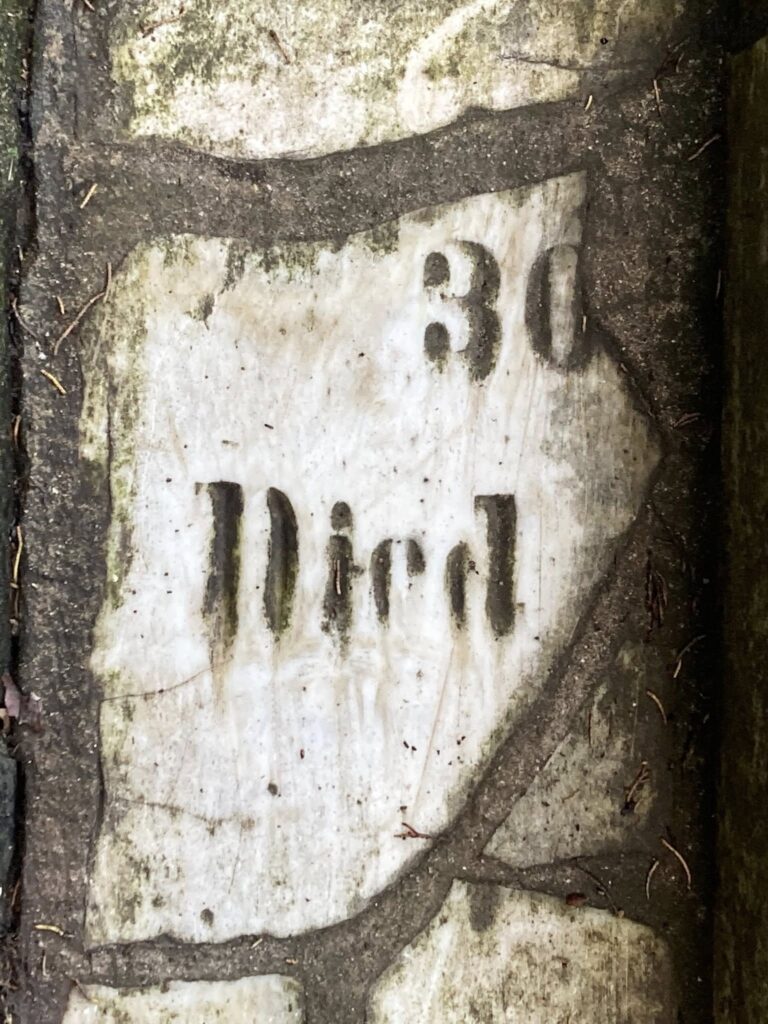
Most of the pieces are placed writing side down, but either from carelessness or a sense of grim humor, the writing is visible.
It’s a fun treasure hunt as you walk through the park, looking dates and names, most of which are only partially saved. My personal favorite piece simple says “Died.”
What more is there to say?
The Gravestone Gutters of Buena Vista park is one of those oddities, a strange treasure, that an adventurous and curious traveler loves to find. That’s you, or you wouldn’t be reading this.
Plus, there are good views. But that’s another post.
As a private guide who gives customized tours, I often get to participate in, and help create, tours unique to my guest’s special requests. I took out a couple who met, married, and had a son here, then moved away when he was a few months old. 13 years later they returned to show him the story of their San Francisco life. They gave me a list of where they met, their favorite restaurants, bars and clubs, where they got married, the apartments they lived in, including the one they lived in when he was born. Nice to be a part of a delightful family outing.
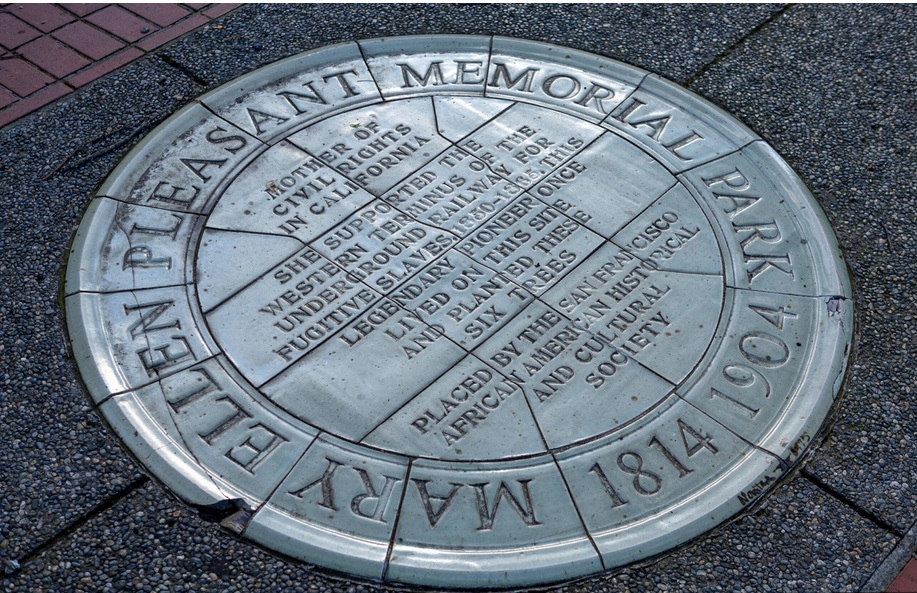
An African-American couple asked to take them on a Black History Tour created by SF Travel. Looking it over, it was mostly a collection of anodyne sites that left out what I’m guessing SF Travel considered “controversial” history, such as the destruction of the Fillmore by Urban Renewal. It also didn’t mention Mary Ellen Pleasant, arguably one of the most important Black women not only in San Francisco’s but American history. There is a plaque dedicated to her at Octavia and Bush St. She’s not hard to find, so I’m guessing SF Travel didn’t want to. I filled in these gaps and more for this couple, who appreciated the curation to their interests.
Mary Ellen Pleasant Plaque at Octavia and Bush
I’ve done a tour of the public art all over the city. A tour of staircases. Photographer tours who asked me to take them to the best shots for sunrise, sunset, and nighttime.
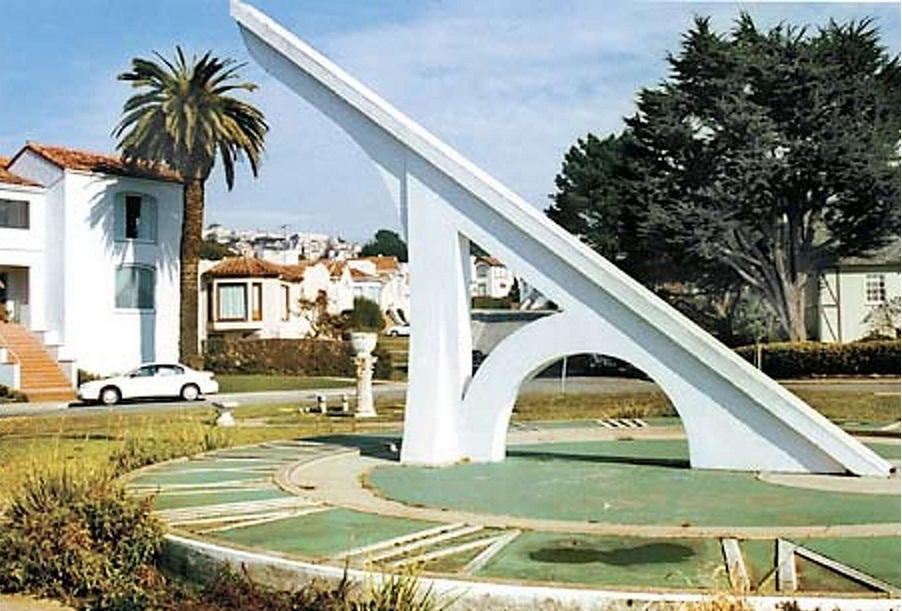
Giant Sundial in Ingleside Terrace
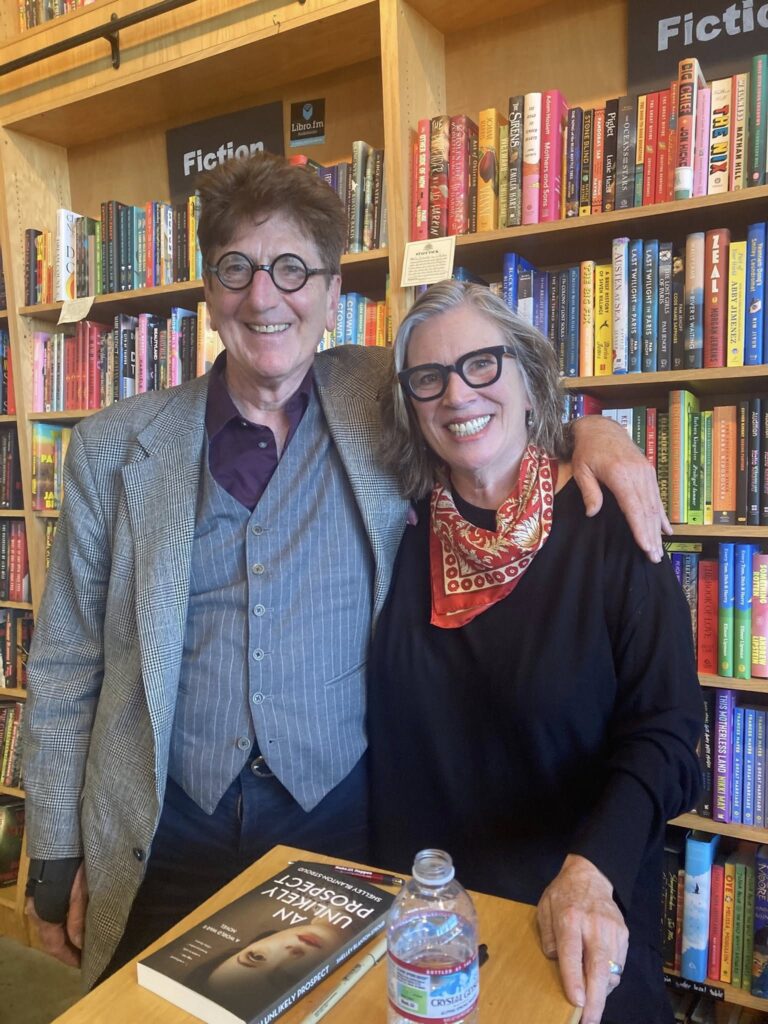
Last year, I got a request from writer Shelley Blanton-Stroud, who was researching a novel about the San Francisco Peace Riots. When Japan surrendered in August 1945, ending WWII, San Francisco’s celebration turned ugly. I’d never heard of this incident, and if you haven’t either, it is worth searching out. (Click on the links; that’s what they’re there for.) She researched locations she wanted to see in person. I did a deeper dive into the history of the Peace Riots and came up with several locations and stories to round out her itinerary. She also gave me character backgrounds, and took her to areas of the city they might have lived.
Me and author Shelly Blanton-Stroud at her book signing at Book Passage in the Ferry Building
Being able to customize tours, I get explore parts of the city I rarely visit, and learn more about the history of San Francisco. I love doing research, and was glad to contribute my two cents worth of insight and advice. As a result, I was honored to get a credit in the book, An Unlikely Prospect.
If anyone reading this has a special request for a tour, I’d be delighted to not only take you out, but help research it for you. No book mention required.
The Sutro Baths, at the western edge of the city where San Francisco ends and Pacific Ocean begins, is a popular site. The ruins are what’s left of a giant glass domed amusement hall that, over its lifespan at one time or another, featured 7 pools, restaurants, an oddity museum, an ice rink, and an indoor beach. Nearby is the Cliff House, currently shuttered, but was once a destination restaurant for the view and drinks. The food, not so much.
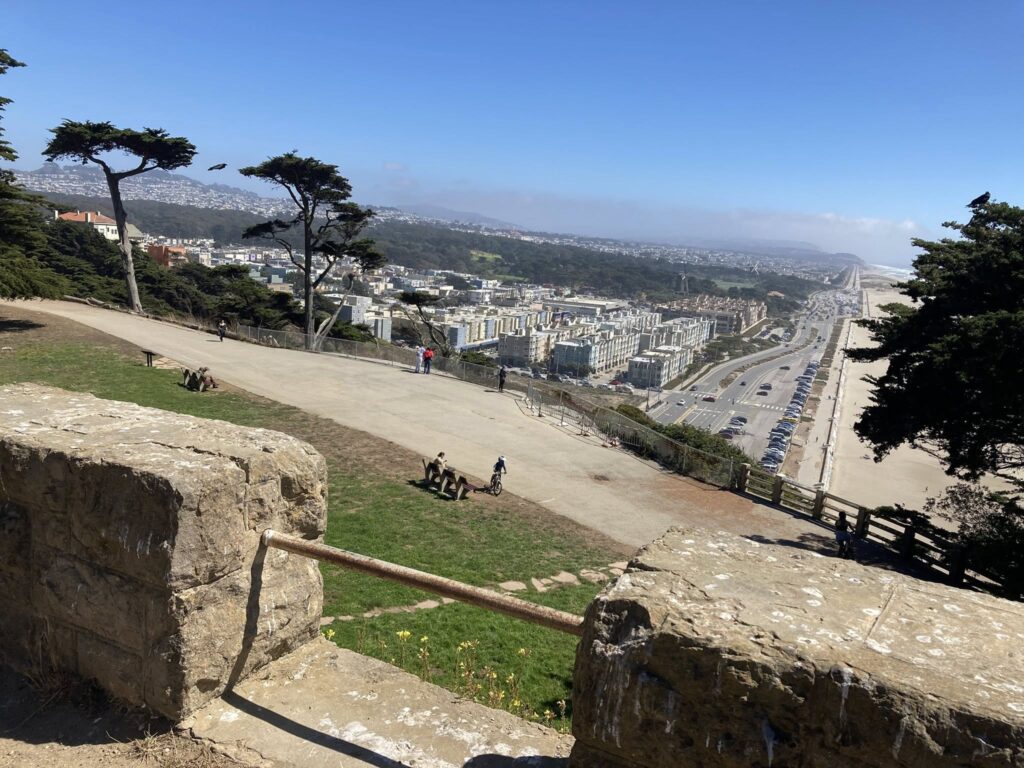
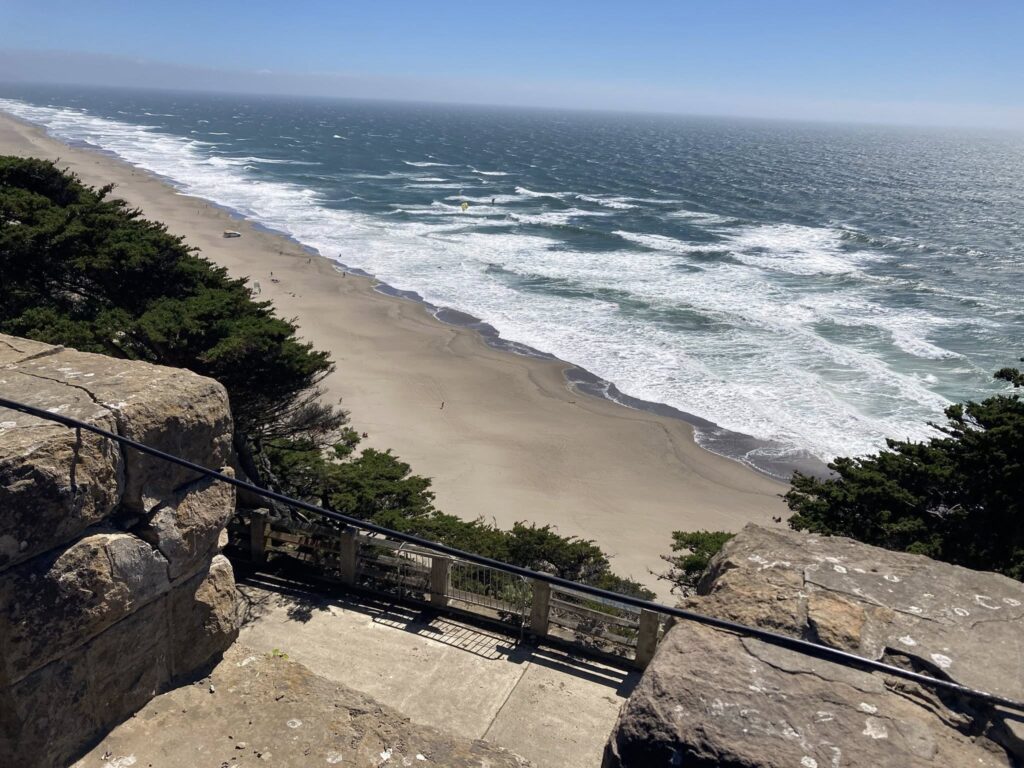
But nearby both, mostly overlooked by locals, and a sure bet unheard of by visitors, is Sutro Heights Park. It is what’s left of the estate of Adolph Sutro, a man who in the 1880’s made a fortune building a tunnel in Nevada, then used that money buy 12 percent of the land in San Francisco. In 1881 he started building his estate, and in 1883 opened the grounds to the public for a dime donation to pay the 17 maintenance workers. Sutro was promoter of getting people to the west side of the city, which in the late 1800’s was not an easy journey. There’s more to the story, but the short version is the estate eventually went into decay, and Sutro’s family donated the house and land to San Francisco in 1938. The house was demolished, most of the statuary removed, and it is now part of the Golden Gate National Recreation Area.
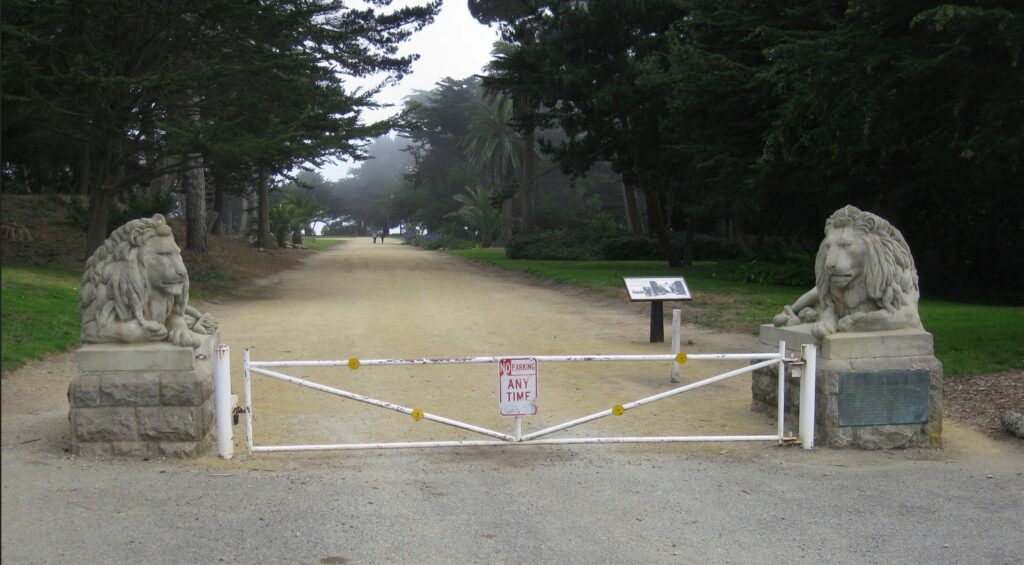
It might be the gate at the entrance, placed to prevent unwanted cars, that makes folks assume the park is off limits to humans, and thus accounting for the sparse attendance.
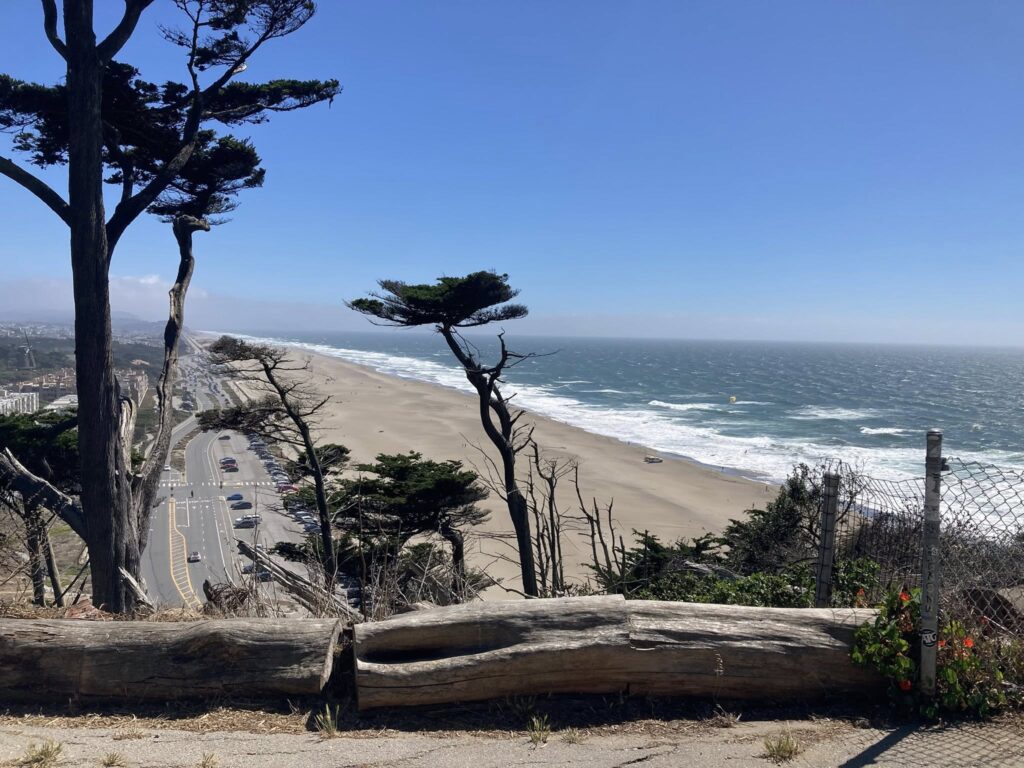
But for those who know to venture past the gate, beautiful views await: The Pacific. Ocean Beach, a name which lacks imagination but makes up for in clarity. The Sunset District. The Great HIghway, which is neither. Golden Gate Heights.
I don’t go there as often as I should, and when I do, and take in the views, promise myself I’ll get back soon. I do better each time.
If you search for a hotel online, the first choices thrust at you are going to be 3rd party booking sites. They will tempt you with their low prices, and, supposedly, ease of booking.
The truth is these, and others like Viator, Hotels(dot)com are parasites on the travel industry and every vendor—hotel, restaurant, tour company—hates them with burning heat of 10,000 suns and a slice of extra cheese pizza left in the microwave too long. The reason is these companies take a huge percentage of the booking fee, and do nothing productive afterward. They have terrible service should something go wrong with your booking. They are good for research, but that is it. After finding what you want, always book directly. You will get better service, and in the case of hotels, a better price.
When you find a room on one of these bloodsucker sites, call the hotel directly and ask them to match it. Not only will they match it, they will often give you an even bigger discount.
Hotels put rooms on these sites because any room they don’t sell is lost revenue. They’d rather sell it at a discount rather than nothing at all. But the parasite sites take a huge bite of the booking fee, from 15-30%. If a hotel can book directly, they don’t have to pay that fee.
For example, say the usual rate for a hotel is $250, and they have booked some rooms for that price, but there are a lot left over. They will release those room to Expedia and other sites, where they might list it for $210. Once you find out the price, if you call the hotel directly, and ask them to match the Expedia price, they will, and probably less if you ask. That’s because if you book the room through Expedia, using the example above, the bloodsucker company could take $35-65, leaving the hotel with $175-$145 profit. If they sell the room directly to you for $180, they keep it all. The hotel makes more money, you get a bigger discount, and Expedia gets nothing. Everybody wins. Except Expedia, and who the hell cares what happens to the blooksuckers?
I recently did the above when booking a hotel in New York for later this year. I got a substantial discount below what Expedia wanted to charge. I did have to agree to the rooms being non-refundable, but that was worth the significant price cut. I bought $39 travel insurance that will cover the cost of the hotel should I have to cancel. “Have to” is the qualification. There needs to be an unforeseeable event for why you cancel, you can’t just change your mind.
Perhaps the best reason for booking directly is that the money goes the vendor. For many small business, such as tour companies, it makes a big difference. Good Karma will be on your side. And these days we all need every bit of luck we can get.
I often get tour guests who say they want to get away from the tourist places and experience the city like a local. I applaude this impulse, as it shows a desire to treat the city as something other than an amusement park or list of places to check off a list. Walking a city is the way to experience it like a local. Unlike suburban dwellers, we walk to stores, coffee shops, restaurants, bars.
For many travelers, this doesn’t feel like they’re “doing” anything. (I have opinions on using variations of the word “do” when traveling, such as “We did the Golden Gate Bridge”, but that’s another post.) But wandering a street, you are doing something.
You’re experiencing daily life and discovering places off the usual tourist path. With that in mind, I will be posting about streets in San Francisco worth walking, and places to be found there.
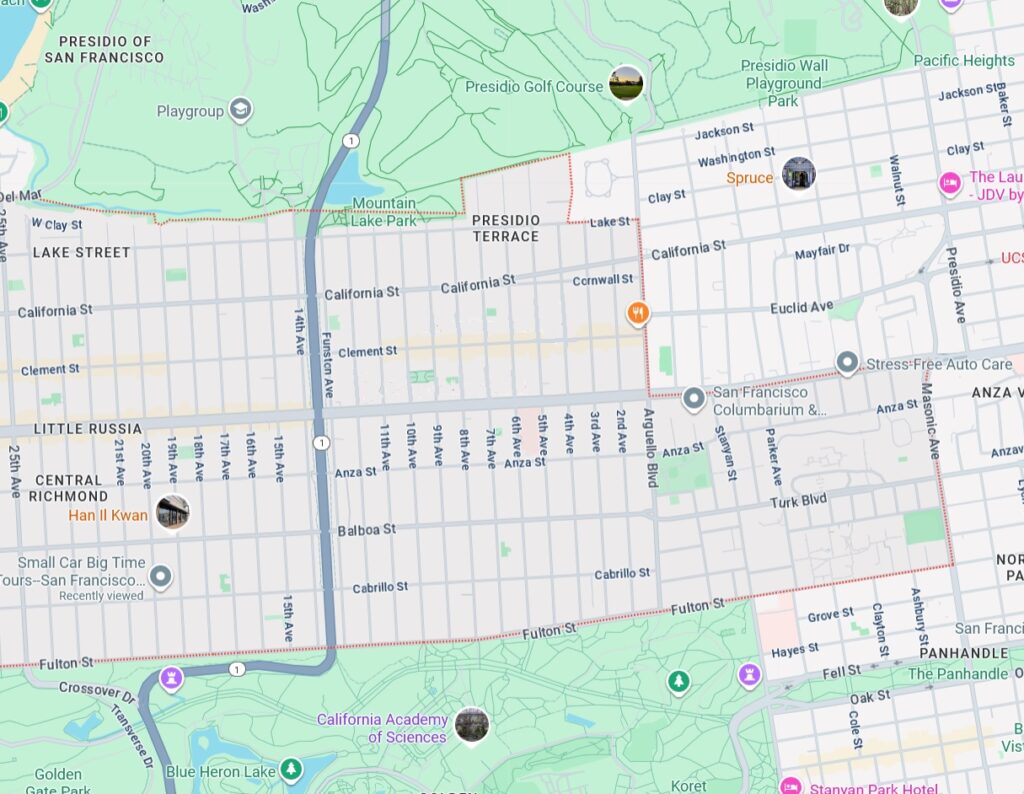
The Richmond District is located between the Presidio and Golden Gate Park. The places mentioned are on Clement St between Arguello and Funston Ave.
First up: Clement St. in the Richmond District It was known as “Little Chinatown” on maps from the 1950-80’s. In 1947 when San Francisco lifted the racial restriction that Chinese people could only own property in Chinatown, there was a migration to Clement St. There was an abundance of affordable starter homes, and good public transportation back to Chinatown. While there still are a lot of Chinese markets and shops, the mix of restaurants and stores show off the comfortable jumble of cultures and cuisines.
What will you “do”? Have a cup of coffee or a drink. Something to eat. Shop. Relax. Witness and share the neighborhood life. That’s doing something worthwhile. These are a few of my favorite spots to get you started, but there’s more to discover.
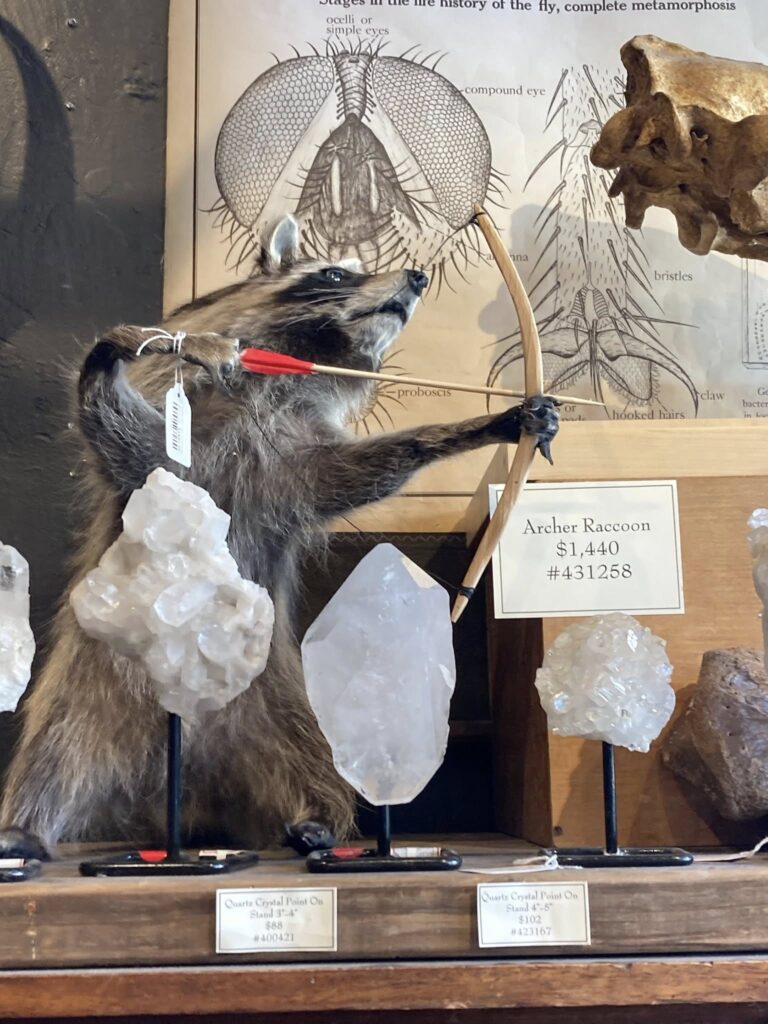
I didn’t realize I wanted, perhaps needed a raccoon archer until I saw one.
When not able to dig through trash cans, raccoons will hunt for prey.
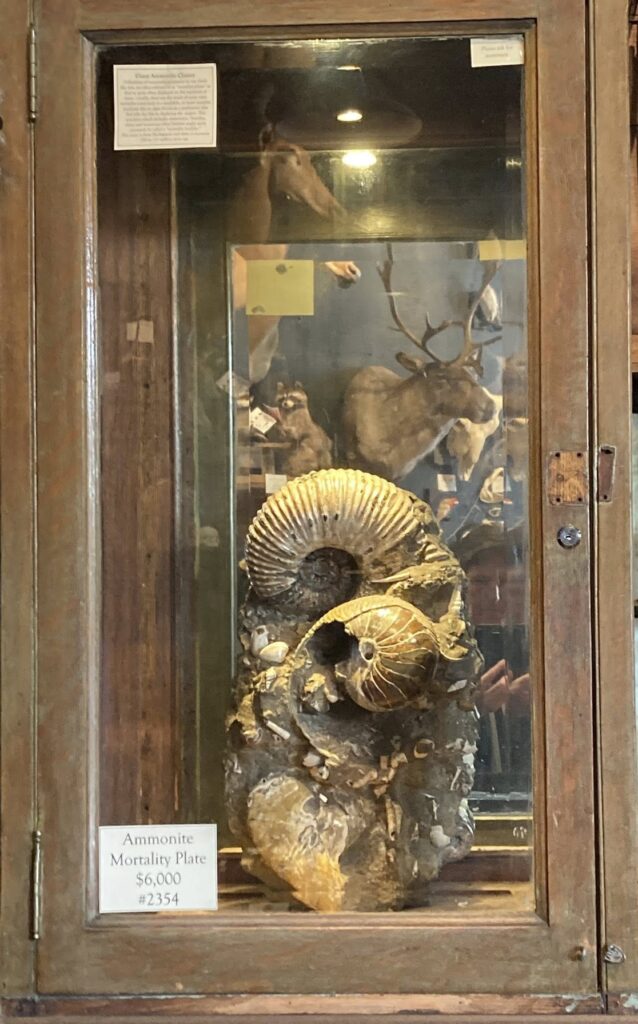
A snapshot of a death assemblage.
Same with an Ammonite Mortality Plate. In case you’re wondering what Mortality Plate is, it’s a fossil containing a lot of creatures that died in the same place at the same time. I’ve found such plates described as “a snapshot of a death assemblage.”
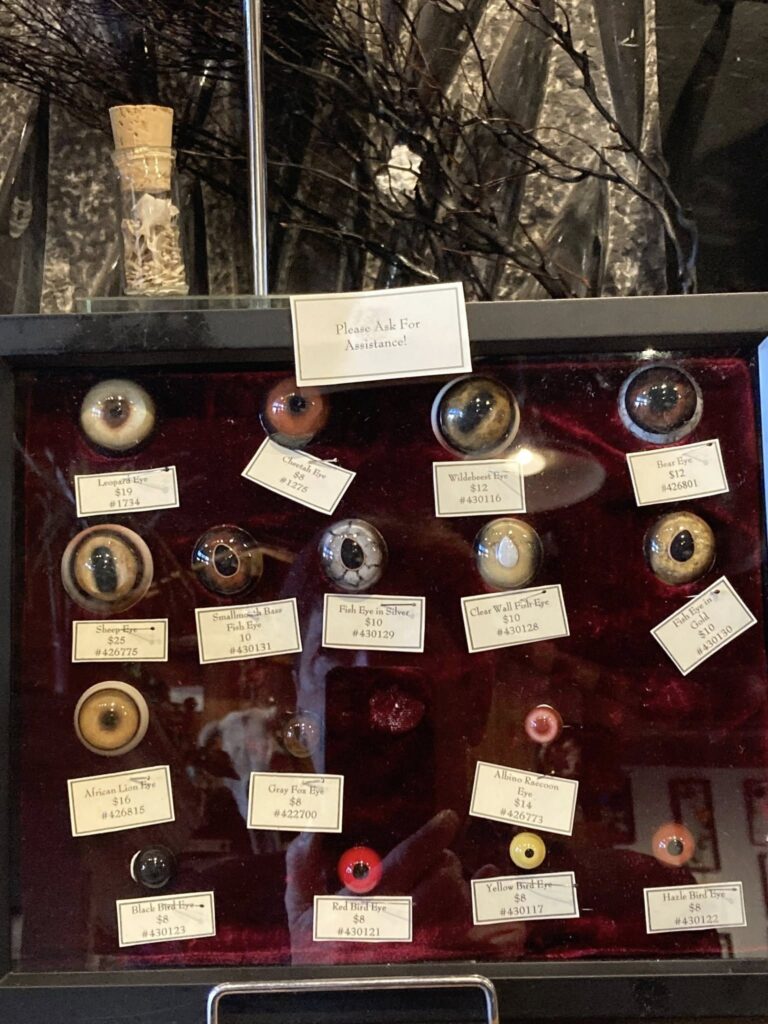
Like a lot of items at Paxton Gate, being rare and strange, they come with a hefty price. The Mortality Plate is $6,000, and the Archer Racoon will set you back $1440. Worth every penny if you have it spare. Should you not have such disposable income, there are things on the lower end of the price range. Glass eyes used for taxidermy are cheaper than a latte and muffin.
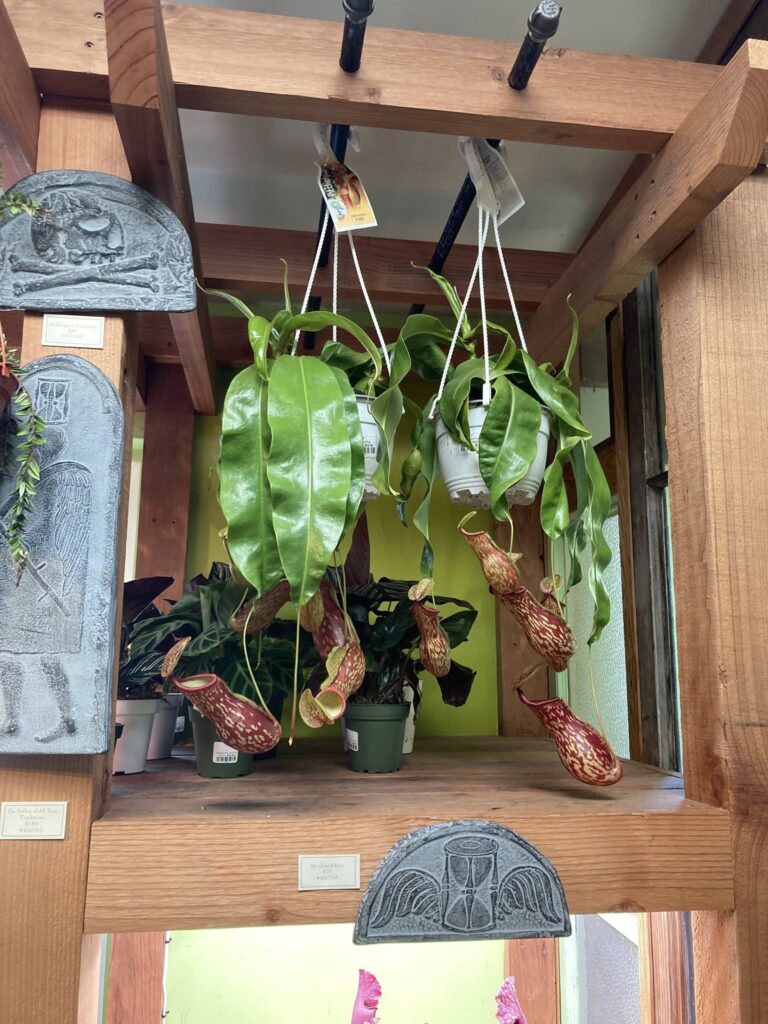
For your garden or living room, there are a variety of carnivorous plants. I’ve always marveled that the survival instinct in all living things is so powerful a plant evolved to eat flesh, and now I can be reminded of the wonders of nature while ridding my apartment of flies.
Pitcher plants are just one variety of carnivorous plants available to enhance your home or garden.
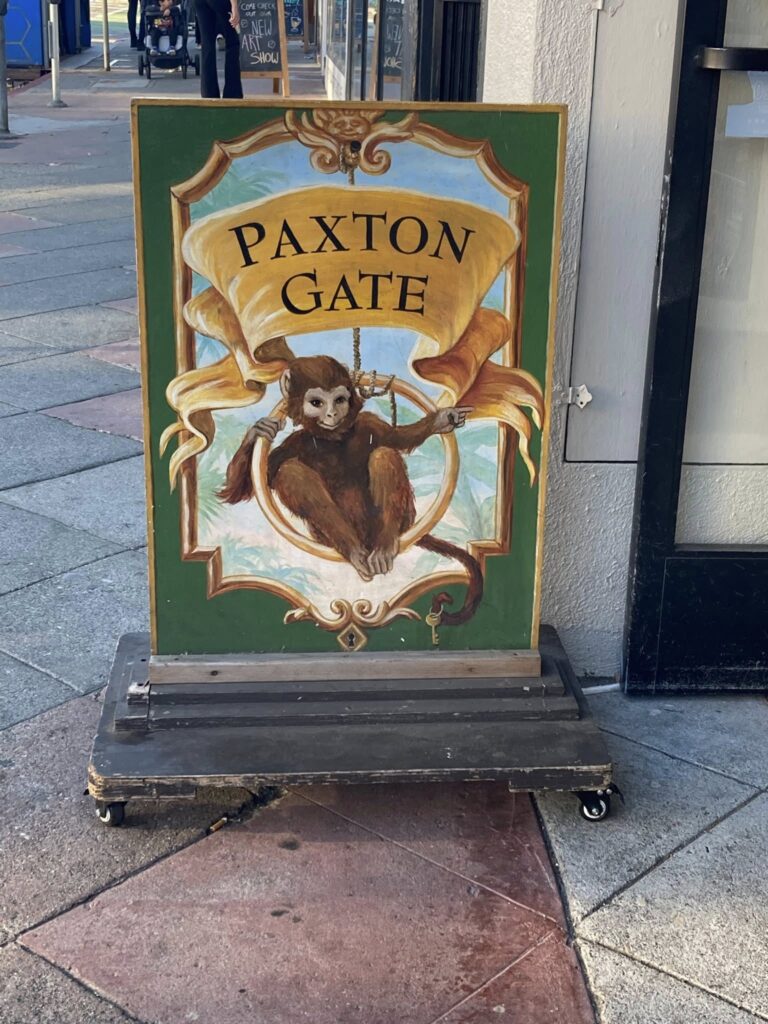
Photography is not only allowed but encouraged. Located on Valencia Street in the Mission, even if you don’t find something to buy, Paxton Gate should be visited. The experience will give you something to talk about over your burrito. And if you can’t visit in person, the website will be your new favorite rabbit hole.
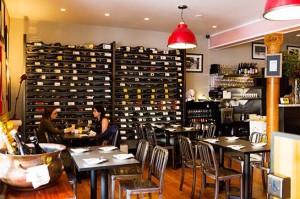
I love a good wine bar. There are few pleasures I enjoy more than sitting with a glass of wine and a book. Sure, I could do it at home, and I do, but being in a public space lets me appreciate the city experience more. Here are 4 of my favorites:
San Francisco is a city of hills, and therefor views abound. There are also several buildings with excellent views. And unlike Manhatten, which is flat and indugling in a view can cost up to $79 most of our views are free. Sure, there are places where you might be charged at little (Coit Tower–$10 for non-residents), or need to buy a drink (the Top of the Mark and other rooftop bars), but the best views don’t cost you a dime. Here are the 5 best free views in San Francisco.
Grandview Park lives up to its name. It’s a bit of a climb to get there, but the result is worth it. You’re rewarded with a panoramic view of San Francisco that few locals and fewer visitors make the effort to see.
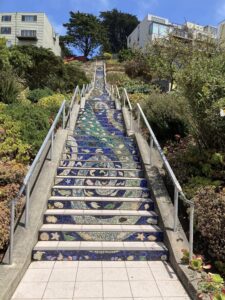
The 16th Ave Tiled Steps. Climb to the top for a view of the Pacific, then continue on to Grandview Park.
Many people know about the 16th Ave Tiled steps, and with good reason. They’re not only beautiful, but a tribute to neighborhood vision and organization. These steps were not a city project, but the idea of people who lived next to a long concrete stairway.
When you get to the top, you have a view of the Pacific. This is where most people stop. But turn to your left, and you’ll see short concrete staircase that leads up to Grandview Park.
At the top of the 16th Ave Tiled Steps, turn to your left, and walk up this short staircase.
At the top of those stairs, you see wooden staircase, longer than the steps you just climbed, but shorter than the tiled steps.
Take this staircase to the top of Grandview Park. It is not as difficult and steep as it looks.
Sit on this bench, and enjoy the view you’ve earned.
The top is the aptly named Grandview Park. There is a green bench to relax in after your climb. Sit, and enjoy the 7 mile panoramic view of San Francisco from the Pacific Ocean to downtown.
This is a view that is even unknown to most San Franciscans, and thus gives you bragging rights for being more than just a tourist when you return home.
If you visit the tiled steps, take the time, and effort, (and it is effort because it is a lot of steps), to experience this view.
Traveling with kids can be difficult sometimes. I guess–I don’t have kids. But I have friends do and I’ve witnessed countless parents dealing with a meltdown of their precious darlings. When you’re traveling with kids sometimes you need a playground to let them burn off energy.
Or ride a Merry Go Round.
Opened in 1888, The Koret Playground, originally called the Sharon Quarters for Children, is considered the first public playground in the United States.
The carousel is open from 10-5pm, and the snack shack nearby is open 9-5pm.
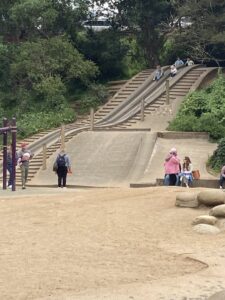
There are long concrete slides. When the park was being remodeled a few years ago, planners wanted to remove the slides, citing them as a possible hazard. I’m all for safety, but there is less danger in these slides than letting your kid run around IKEA. Fortunately, people who lived in the area for decades and grew up sliding on cardboard down these slides lived to tell the tale convinced the planners to keep them.
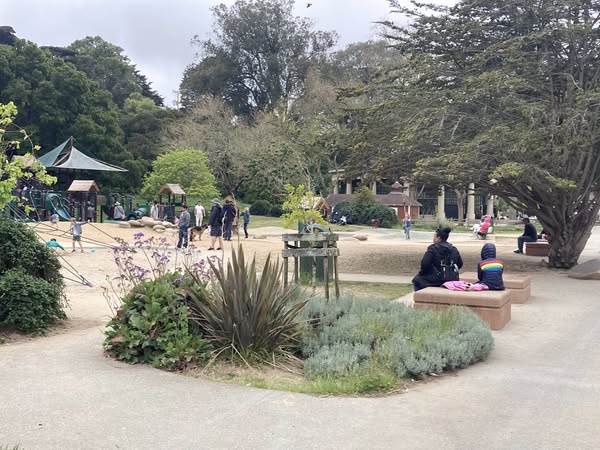
Letting the kids play and run around may get them in the mood for a nap. Plus it’s fun. And the playground is enjoyable for parents, with plenty of seating near play equipment.
When you need to take a break–the kids will let you know when that is–Koret Playground is an oasis.
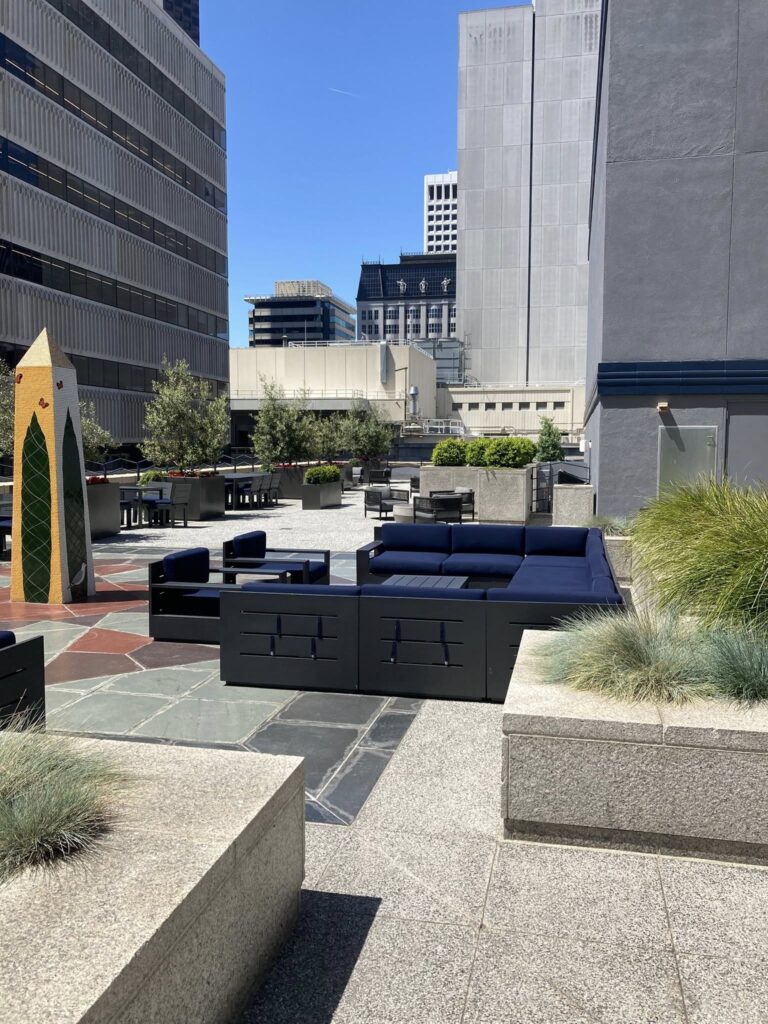
Downtown San Francisco has many public spaces known as POPOS: Privately Owned Public Occupied Space. These are located in office buildings and hotels, and are available for the public to enjoy during operating hours, which vary from location. The the public rooftop of 343 Sansome St. is one of the best hidden gems in the city, but few people know about it.
To get up there, go to the 15th floor. You may have to check in with the bored security guard and tell him where you want to go. The other floors are only available by touching a keycard to a number pad, but the 15th floor is open to everyone.
It is open during business hours, so figure 8-6 weekdays. 9-5 just to be sure.
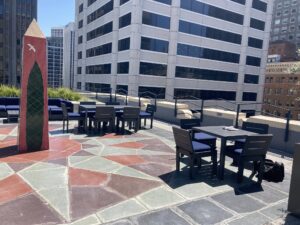
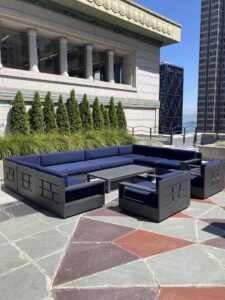
The are nice views of downtown, even if somewhat constrained by the number of taller buildings nearby. The roof itself is nice, with a tiled floor. The furniture is high quality and comfortable, not the usual functional but uninviting metal chairs and table tops.
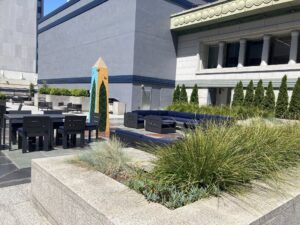
I was downtown the other day and bough a gyro from the outstanding halal cart at the corner of California and Montgomery. Looking for somewhere to eat it, I remembered the 343 Sansome was just a few blocks away. Getting a nod from the sullen security guard, rode the elevator up 15 floors. I had to roof to myself. A perfect lunch setting.
This is the sort of place I would love to discover if I was visiting another city–a hidden gem that even few locals know about. It gives you bragging rights for being an active explorer and good traveler.
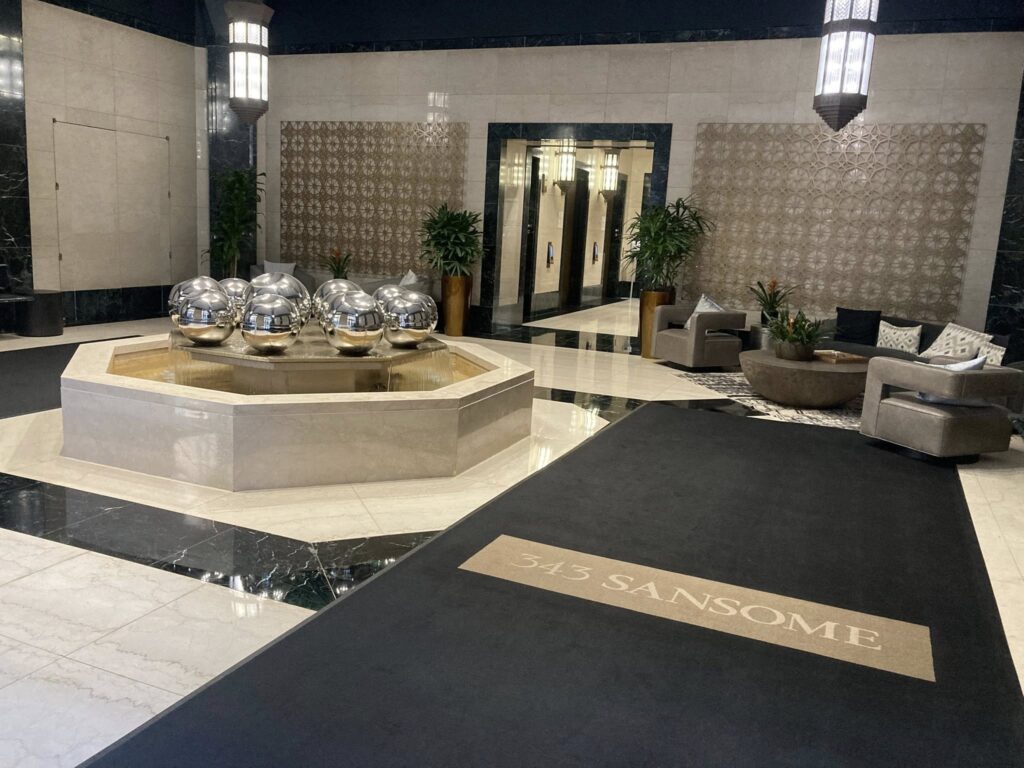
As a bonus, the lobby of the building is also a public space. Again, good, comfortable furniture, and includes a modern water sculpture to settle your nerves should they need settling. Easy access to the lobby right off Sacramento St.
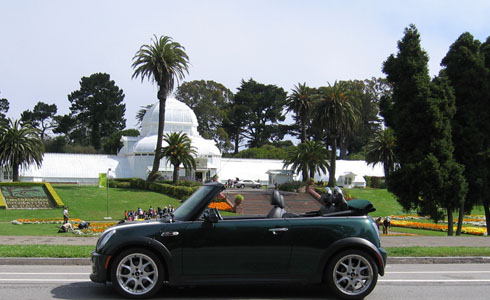
Reed Kirk Rahlmann, owner of Small Car Big Time Tours, stands outside the Mini Cooper he uses to take guests on tours through San Francisco. Jessica Christian/The Chronicle
In a city known for big swings and seven-figure seed rounds, Reed Kirk Rahlmann’s idea was almost painfully small.
He started his own tour company driving a Mini Cooper, a car that — concierges, competitors and strangers love to point out — will never carry more than a trio of paying customers.
“Even recently I was talking to this guy in a bar about what I do,” Rahlmann says. “And he goes, ‘You got to get a bigger car. … What if there are four people? How are you going to scale up? ’ I said, ‘Oh, I don’t think I ever want to do that.’ ”
Reed Kirk Rahlmann, owner of Small Car Big Time Tours, drives Kenny Chen of New York and Ricardo Senno of Chicago in his Mini Cooper on a tour through San Francisco earlier this month. Jessica Christian/The Chronicle
Rahlmann’s business, Small Car, Big Time Tours, gives the smallest human-guided vehicle tours in San Francisco (even the three-wheeled Lucky Tuk-Tuk tour holds six passengers). His history-filled custom journeys can range from Monterey to Muir Woods, but many focus squarely on San Francisco. And he may be the city’s best cheerleader of the doom loop era, cleansing visitors of their “San Francisco is a hellscape” misconceptions, no more than three at a time.
Meeting on the easternmost end of California Street on a crisp Monday where bright blue skies split the skyscrapers, Rahlmann’s parked car looks almost comically small, surrounded by a delivery truck, large sedan and two cable cars.
But the nimble advantages of a vehicle that’s just 151 inches long are apparent as soon as he zips away from the curb.
With the top down, it feels like a magic carpet ride through the city, hosted by the ultimate insider. In one 10-minute cruise from Grace Cathedral to North Beach, Rahlmann covers the history of Charles Crocker’s spite fence and the origins of Chinatown, names his favorite little-known public bathrooms (near Musee Mecanique at Fisherman’s Wharf and behind the California Palace of the Legion of Honor) and declares the free admission to the cable car barn and powerhouse one of the best deals in the city.
“That’s how the cable cars get around!” Rahlmann says, as if he’s seeing it for the first time, instead of the 500th.
He follows this, like many anecdotes on our 1½-hour tour, with a burst of non-sequitur positivity. “This is one of the benefits of being in the Mini. You look up and you can see the city. Man, it’s stunning today!”
The Lafayette native fell in love with San Francisco during his own family visits.
“I just thought, ‘Oh my God, this place is amazing.’ It always felt like my city,” Rahlmann says. “I moved here in college and stayed, and just became one of those hopelessly romantic San Franciscans.”
Rahlmann attended San Francisco State University and from there took the most circuitous (and most San Francisco) route imaginable to his current job.
He was an improv comedian in the early 1980s; performed at Pier 39, walking on broken glass and driving a 4-inch nail into his nasal cavity; and worked more recently as a mentalist-for-hire under the name Sebastian Boswell III.
Reed Kirk Rahlmann, left, and Greg Proops of the now-defunct Faultline comedy improv group pose for a Chronicle photographer in 1985. Vincent Maggiora/The Chronicle
He’s also worked as a writer — for Playboy magazine, New West and the Chronicle — and acted in local television and movies, including “Howard the Duck” (1986) and “Leonard Part 6” (1987).
“Had I been in ‘Ishtar,’ ” Rahlmann quips, “I would have scored a trifecta for appearing in the biggest bombs of the late 1980s.”
When paid gigs started becoming more scarce in the early 2000s, Rahlmann answered a Craigslist advertisement for Mr. Toad’s Tours, a local company that offered trips around San Francisco in vintage automobiles.
“They asked, ‘Tell us three things you think we don’t know about San Francisco,’ ” Rahlmann said. “And I knew this was my wheelhouse, because I spent my entire adult life studying San Francisco, exploring San Francisco.”
When Mr. Toad’s shut down in 2014, Rahlmann started his own tour business. He wanted a fun car — a convertible for fresh air, a flexible tour and small groups so he could add a personal touch. The Mini Cooper seemed like a perfect fit.
“It’s a great car to see the city,” Rahlmann says. “I want people to leave with more than just a postcard. I want them to have a real sense of San Francisco — what makes it a unique and special place.”
Rahlmann goes all in on presentation. Standing outside the car in a tie and vest that match the exterior’s “British Racing Green” color, he immediately hooks up a microphone, using the Mini’s speaker system to amplify his voice, even though his most distant passenger is about 3 feet away.
Then, the guide dives into history, pointing at a laminated photo to show that half the current Financial District would have been underwater in the 1800s — before explaining how the Gold Rush turned San Francisco into a city of multiculturalism and innovation in an instant.
But the experience is choose-your-own-adventure throughout. One married couple wanted a tour of San Francisco built around the places they met, lived and enjoyed together, so they could show their 13-year-old son. Another pair wanted to drive up the coast and photograph nature.
And some passengers, no judgment, just want to see the sights in the snow globe they purchased near Fisherman’s Wharf.
Ricardo Senno of Chicago, left, and Kenny Chen of New York enjoy a ride through Fisherman’s Wharf as chauffeured by Reed Kirk Rahlmann of Small Car Big Time Tours in San Francisco earlier this month. Jessica Christian/The Chronicle
“A lot of people will say, ‘I want to go down Lombard Street, but I know it’s touristy,’ ” Rahlmann said. “And I tell them, ‘Lombard Street is fantastic. You do not have to be shy about that.’ You know, most of the things that are touristy are really freaking interesting.”
The lack of instant riches is one of the few downsides to a job that has become his full-time gig; Rahlmann estimates he gives between 275 and 300 tours per year.
With each group getting a personalized tour, often with many phone calls and emails exchanged in advance (at no extra cost), Rahlmann says his preparation can exceed the time on the road.
“And that’s fine. That’s part of it,” he says. “I want them to have the best experience possible.”
Driving on steep hills in his personal auto is another challenge — the Mini has manual transmission — to the point where Rahlmann can’t immediately answer accurately how many times he’s replaced the clutch on the 9-year-old vehicle. (He thinks it’s twice, but maybe three times?)
But Rahlmann can park in tight spaces and make a quick three-point turn on a narrow street or wide alley (try doing that in a Gray Line bus), feeding the “we can go anywhere” vibes of his tour guide philosophy.
New York resident Kenny Chen, a recent client, booked Small Car, Big Time Tours with Ricardo Senno; the childhood friends have gathered each year for the last decade to sample food in different U.S. cities.
Chen immediately knew he was not on a typical tour when they started getting calls and texts from their guide, to fine-tune a tour that included several major landmarks, Gold Rush lore and some food tips for their stay.
“It was so detailed, with so much history,” said Chen, who rated his trip with Rahlmann as the best he’s taken. “We’ve done a lot of tours and nobody pulls out an iPad and starts showing (photos) and telling you how things were 100 years ago.”
Rahlmann says he notices tiny shifts in the city through his work, such as how GPS mapping technology on phones has changed traffic patterns, clogging what were once his shortcut streets. Today, he gets more requests to see the “Mrs. Doubtfire” house at 2640 Steiner than some major landmarks. While tourists still dominate his bookings, more locals seem interested in exploring their backyard and learning the history.
Other changes are less subtle, including a couple of years ago, when out-of-town tourists began telling him, by way of introduction, “Oh, San Francisco. They told me it’s a hellscape.”
Inevitably, he says, the customers are taking it all back two hours later.
Reed Kirk Rahlmann, right, owner of Small Car Big Time Tours, shows historic pictures of Fort Point to Ricardo Senno of Chicago while driving him and his friend Kenny Chen of New York in his convertible Mini Cooper on a tour through San Francisco earlier this month. Jessica Christian/The Chronicle
“They’ll go, ‘This is beautiful. This is fantastic. This is great. I don’t know what my friends were talking about,’ ” Rahlmann says. “And I say, ‘Spread the word. Tell them. Let them know how fantastic it is.’ ”
Rahlmann says the gig brings him closer not just to his passengers, but the rest of the city, too. He has become friendly with everyone from Lombard Street’s landscaper to the Fort Point surfers. And nine years into his tour guide business, he’s still curious, still learning new things.
Those are the days when the work feels less like Rahlmann’s job, and more like a calling.
“I love sharing history. I love showing people the city,” Rahlmann said. “I love having them leave not only just seeing sights, but having a sense of what makes San Francisco the special city that it is.
“Trying to give them a sense of why we all came here in the first place.”
Reach Peter Hartlaub: phartlaub@sfchronicle.com; Twitter: @PeterHartlaub
Peter Hartlaub is The San Francisco Chronicle’s culture critic and co-founder of Total SF. The Bay Area native, a former Chronicle paperboy, has worked at The Chronicle since 2000. He covers Bay Area culture, co-hosts the Total SF podcast and writes the archive-based Our SF local history column. Hartlaub and columnist Heather Knight co-created the Total SF podcast and event series, engaging with locals to explore and find new ways to celebrate San Francisco and the Bay Area.
If you’re looking for an evenings entertainment, it would be difficult to do better than Jay Alexander’s show at the Marrakech Magic Theater.
Magician Jay Alexander awaits to amaze you at the Marrakesh Magic Theater
Jay Alexander is one of the best magicians in the San Francisco Bay Area. Up until a few years ago, it was rare to see Jay perform in public because he is so busy performing around the world entertaining guests at corporate shows and private events. In January 2017 he opened the San Francisco Magic Theater, where he currently performs 5 shows a week, Friday-Sunday. When summer rolls around he usually adds two shows on Thursday. Check his website for the schedule. A lot of magicians never get past the “I’m going to fool you!” phase, which was what initally attracted them to magic. A magician above all should be entertaining; someone who can be interesting and engaging even without performing a trick. Jay is one of those performers who is professional, imaginative, really funny, and very entertaining. And an excellent magician.
Jay is primarily a mentalist, which is a form of magic that demonstrates what appears to be hightened mental skills such as ESP. The 90 minute show is family friendly, but it is not a kid’s show in that there’s not any silly colorful tricks or bunnies or puppets to hold a younger child’s attention. I would say the cut off is 12 or 13, or a precocious 10 year old.
The lobby of the Marrakech Magic Theater is filled with Jay’s collection of magic memorabilia, so things are interesting from the moment you step through the door. You should arrive an hour before showtime to look over his collection of posters and props.
A small sample of the poster collection in the Oasis Lounge in the lobby of the Marrakesh Magic Theater
Food and drinks are available to relax with in the Oasis Lounge, and there is a good chance you get to see close-up magic. The theater itself is anintamate jewel box and holds around 40 people, so every seat is good.
Jay is a buddy of mine, but I would recommend him even if he wasn’t. He’s a great performer, and the show is memorable. Treat yourself to an evening you won’t forget.
419 O’Farrelll St. San Francisco, 94102 415-794-6893
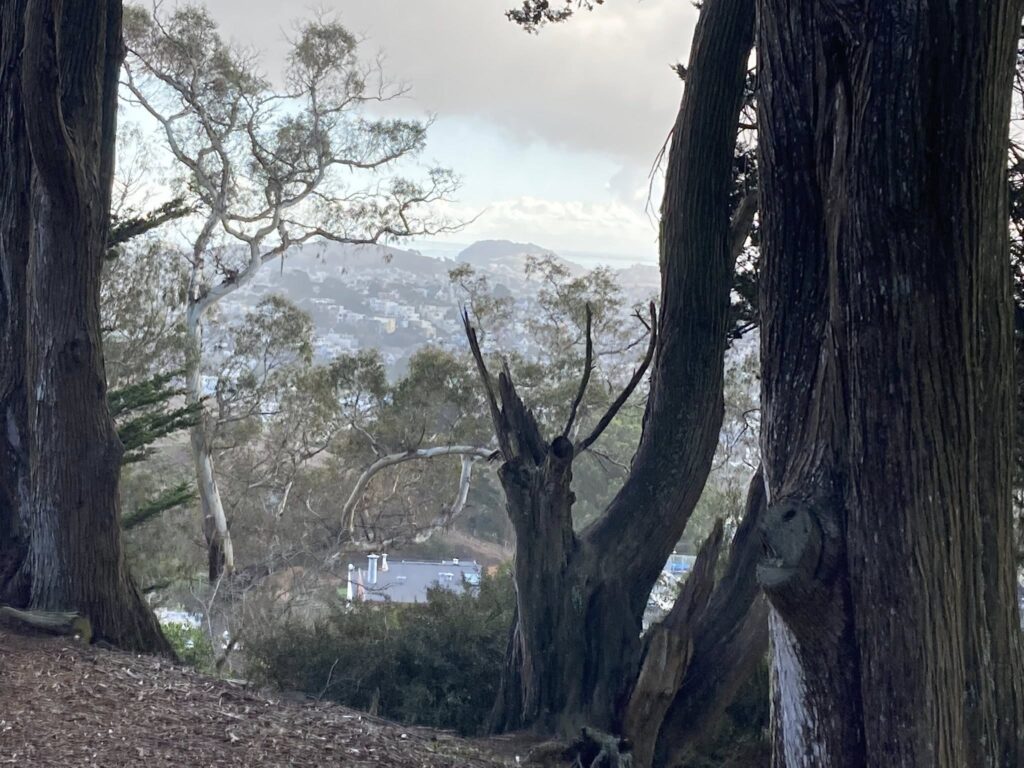
San Francisco, having been built on hills, has an abundance of views. Some you pay for, such as the top of Coit Tower or the bar at the top of the Mark Hopkins Hotel. (The bar is named “Top of the Mark.” What it lacks in imagination makes up for in clarity. The bar itself is as underwhelming as the view is spectacular. But I digress….) One of the best free views is a hidden gem that most San Franciscan’s don’t know about. And even though it is located behind a building at 400 Parnassus, on the UCSF Medical School Campus, most students and faculty don’t know about it either. Since few people know about this panoramic view from the Pacific to downtown, with the Golden Gate Bridge in the middle distance, you will probably a choice of benches to yourself. The campus student union is close by, where you can get a snack to enjoy while you take in the view. It is 3 blocks off of Golden Gate Park. If you don’t want to walk up steep 3rd Ave, or the slightly less steep Hillway, there is an elevator inside 35 Irving St to take you up. But I encourage you to walk if you can–that’s what the locals do. Visit here, and you will have experienced a view 99.5% of visitors never see, and almost equal number of residents don’t know about either. Traveling, good traveling, is about getting off the usual path. And it will give you bragging rights for seeing something most people who come to San Francisco miss. By the way, another free view close by is the DeYoung Museum Tower in Golden Gate Park.
Behind the Medical Building at 400 Parnassus is a little known view of San Francisco
Looking west toward the Pacific Ocean from behind 400 Parnassus.
Looking east toward downtown.
Benches and tables you will probably have all to yourself.
Benches to relax on while taking in the view. A quiet place away from crowds.
Here’s a 3 minute story the local CBS station did on Small Car Big Time Tours. I got to show the reporter places and tell her stories she’d never seen or heard before. Honored to be on the same channel as Stephen Colbert.